Related Industries
Curation by industry experts
Hot Articles
Popular Tags
Is My Facility Water Temperature Suitable for a Heat Exchanger?
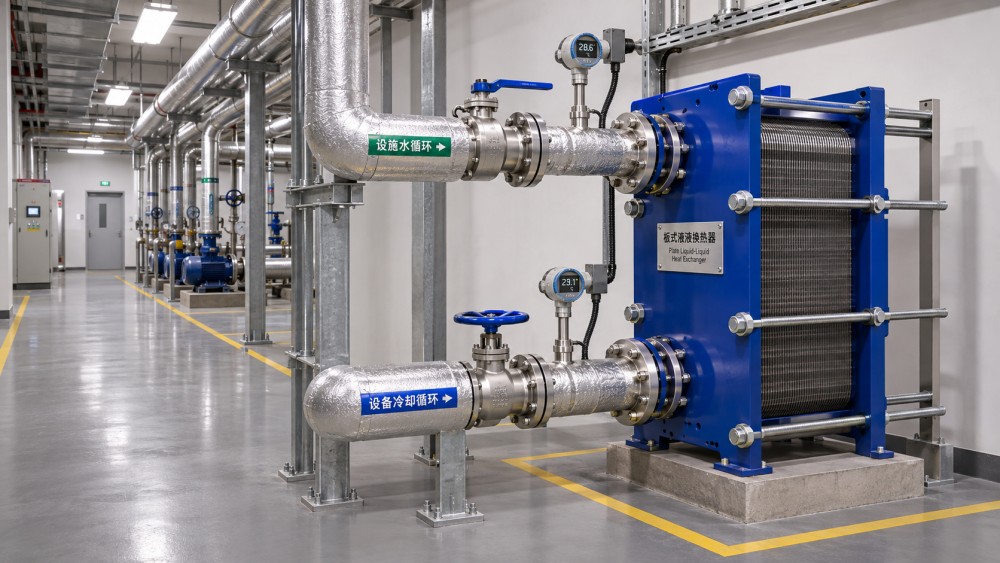
Facility water is suitable for a liquid cooling heat exchanger only if the complete system can remove the required heat while keeping the equipment coolant within its permitted temperature range. A facility water supply temperature that falls inside a manufacturer’s stated operating limits is a useful starting point, but it does not establish that the heat exchanger can meet the intended load.
Compare the warmest expected facility water supply temperature at the heat exchanger with the required equipment coolant supply temperature. Then check the heat load, flow rates, pressure drops and manufacturer’s performance data at those same conditions. Seasonal changes, other loads on the facility loop and control behavior can all affect the result.
Which water temperatures should be compared?
The most important facility-side measurement is the water temperature entering the heat exchanger, not the temperature leaving it. On the equipment side, identify the maximum permitted temperature of the coolant supplied to the IT equipment or other load. These temperatures need to be defined at the relevant connection points because piping, pumps and other equipment can change temperatures between a central plant and the heat exchanger.
A liquid-to-liquid heat exchanger transfers heat from the warmer equipment loop to the cooler facility loop. In normal steady operation, the equipment-side coolant leaving the heat exchanger cannot be cooled below the temperature of the facility water entering it through passive heat exchange alone. In practice, a temperature difference is also needed to transfer heat at a useful rate.
For example, if facility water enters at 30°C and the equipment requires coolant at no more than 32°C, the available difference is only 2°C. That condition is not automatically impossible, but it calls for a heat exchanger and flow arrangement rated to deliver the required capacity with that small approach temperature. A rating based on cooler facility water does not prove that it can do so.
If the facility supply is 33°C while the equipment must receive coolant no warmer than 32°C, a passive liquid-to-liquid exchanger cannot meet that requirement at steady state. The design would need a lower facility water temperature, an approved higher equipment coolant temperature, active cooling or another change to the system.
What does “approach temperature” mean?
For this check, the cold-side approach is the difference between the equipment coolant temperature leaving the heat exchanger and the facility water temperature entering it. A smaller approach leaves less temperature difference available to drive heat transfer, so it generally requires more heat-transfer capability, a different flow arrangement or a lower load.
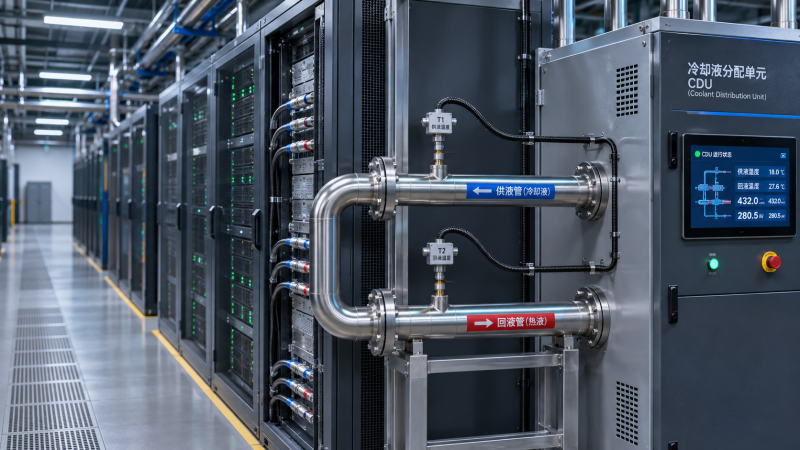
Manufacturers do not always use the word “approach” for the same pair of temperatures. Ask for the four terminal temperatures—facility water entering and leaving, and equipment coolant entering and leaving—rather than relying on an approach figure without its definition. Also confirm whether the published temperatures apply to the heat exchanger itself or to a complete coolant distribution unit (CDU), which may include pumps, controls and other components.
How can I check the facility water temperature?
Use trend data or measurements at the proposed heat exchanger inlet, preferably under representative operating conditions. A central plant setpoint is not a substitute for the temperature actually delivered at the connection. Record the time, operating mode, connected load and sensor location so that the reading can be interpreted later.
Pay particular attention to the highest credible supply temperature during the period in which the cooling system must support the intended load. Depending on the facility, the limiting condition could occur during hot weather, reduced plant capacity, a change in heat-rejection mode or simultaneous demand from other equipment. A single reading on a cool day cannot establish the design condition.
Check the minimum supply temperature as well. Water that is colder than necessary can create condensation risk on components exposed to room air. Whether condensation occurs depends on surface temperature and local dew point, not simply on the water temperature alone. Confirm the equipment’s permitted temperature range and the intended use of insulation, dew-point controls and monitoring.
Existing sensors can provide useful trends, but their accuracy and position matter when the temperature margin is small. If the difference between the facility supply and the required coolant supply is only a few degrees, measurement uncertainty and heat gain along the piping can change the compatibility assessment.
Why are flow rate and heat load part of a temperature check?
A heat exchanger may operate within its allowable temperature range and still fail to transfer enough heat. Its capacity depends on the temperatures and flow rates on both sides, the fluids used, the exchanger design and the condition of its heat-transfer surfaces.
For water, a useful preliminary energy balance is:
Heat load (kW) ≈ 4.18 × water flow (L/s) × water temperature rise (°C).
The factor is an approximation for liquid water; use the fluid’s actual properties when glycol or another coolant is present. This equation estimates heat carried by a measured flow and temperature change. It does not establish whether a particular heat exchanger can deliver the required outlet temperature.
Suppose the facility loop must absorb 100 kW and is allowed to rise from 25°C to 30°C across the exchanger. The approximate required water flow is 100 ÷ (4.18 × 5), or 4.8 L/s. That is a preliminary facility-side calculation. The selected exchanger must still be rated for the corresponding equipment-side temperatures and flow, and the facility must be able to deliver that flow at the required inlet temperature.
Flow also affects pressure drop. A proposed operating point is not workable if the pump and available differential pressure cannot overcome the exchanger, valves, strainers and connecting pipework at the required flow. Conversely, excessive flow or pressure can exceed equipment limits. Use the manufacturer’s pressure-drop data for the actual fluid and operating condition rather than assuming that an existing pump has sufficient capacity.
Which manufacturer specifications matter?
Ask for a performance selection or rating at the proposed operating point, not just a maximum capacity stated in a brochure. A capacity figure has meaning only with the temperatures, flow rates and fluids used to establish it. The information should distinguish between limits that protect the equipment and conditions under which the stated cooling performance is available.
A useful request includes:
- Required heat removal, including the intended peak load and any explicitly defined design margin.
- Facility water entering temperature at the connection, available flow, fluid composition and allowable pressure drop.
- Equipment-side coolant type, entering temperature and flow, together with the maximum allowable coolant supply temperature to the load.
- Predicted outlet temperatures and pressure drops on both sides at the stated conditions.
- Applicable operating limits, control range and any allowance used for fouling or performance degradation.
Confirm that all parties use “supply” and “return” consistently. Facility water supply enters the heat exchanger, while equipment coolant supply leaves it on the way to the load. Reversing those labels can make an otherwise credible selection unusable.
If a complete CDU is being evaluated, establish what the performance data include. Heat added by pumps, temperature-control components and the location of sensors or mixing valves can affect the temperature delivered to the equipment. The relevant acceptance point is the specified equipment-side connection, not necessarily the exchanger plate outlet inside the unit.
What if my facility water is warmer than the supplier’s example?
Request a new rating at the warmest expected inlet temperature and the required load. Do not extrapolate from a published example by assuming that every degree of warmer facility water produces exactly one degree of warmer equipment coolant. Controls, flow limits and the exchanger’s temperature profile can change the result.
Possible design responses include increasing heat-transfer area, adjusting flow within permitted limits, lowering the facility supply temperature or using active cooling. A higher allowable equipment coolant supply temperature may also create margin, but only if the relevant equipment manufacturer permits it under the intended operating conditions. Each option must be evaluated against pressure drop, controls and the rest of the cooling system.
If the required load cannot be supported at the warmest facility condition, identify the consequence explicitly: reduced allowable IT load, a limit on simultaneous operation, a plant upgrade or a different cooling design. A system that meets the load only when facility water is cooler than the stated design condition should not be treated as fully qualified for that condition.
How do water quality and maintenance affect the result?
Temperature and flow calculations assume a certain heat-transfer condition. Deposits or biological growth can reduce heat transfer and increase pressure drop; corrosion can damage components and create leakage risk. The acceptable water chemistry depends on the exchanger’s materials, seals and manufacturer requirements, as well as the facility water treatment program.
Check compatibility on both sides of the exchanger. A suitable facility water temperature does not make an incompatible fluid acceptable, and a water treatment specification for one loop does not automatically apply to the other. Confirm filtration, inspection and cleaning arrangements, and whether the performance selection includes an allowance for fouling.
Instrumentation should make deterioration visible. Trends in inlet and outlet temperatures, flow and differential pressure can help distinguish a rising facility supply temperature from restricted flow or declining exchanger performance. Interpret those readings alongside load and control-valve position: a temperature change alone does not identify the cause.
Can the system be accepted using a low-load test?
A low-load test can verify connections, controls and basic operation, but it cannot by itself prove full-load performance at the warmest specified facility water temperature. During commissioning, record the heat load, fluid temperatures, flows, pressure drops and relevant control settings at clearly defined measurement points.
If full design conditions cannot be reproduced, document the conditions actually tested and use an agreed engineering method to assess the untested operating point. Retain the manufacturer’s rating and the assumptions used for that assessment. This distinction matters when seasonal water temperatures or future IT loads have not yet been reached.
The practical decision is therefore not whether facility water is “cold enough” in isolation. It is whether a documented operating point shows that the complete system can deliver the required coolant temperature and heat removal, with acceptable flow and pressure drop, across the conditions the facility is expected to support.
Questions about data center smoke detection standards? Contact RackLedger for further insights.
We respect your privacy. Your information is strictly confidential.
Recommended News
 Data Center Variable Frequency Drives: Cutting Fan and Pump Energy UseData Center Variable Frequency Drives can cut fan and pump energy use. Explore retrofit opportunities, costs, risks, and practical steps to protect cooling reliability.Nov 04, 2026
 Why Is My Coolant Temperature Sensor Reading Too High?How do I troubleshoot a coolant temperature sensor that reads too high? Verify the reading, trace cooling and control faults, and protect data center equipment.Nov 04, 2026
 Where Should Coolant Temperature Sensors Be Placed in a Loop?Where should coolant temperature sensors be placed in a liquid cooling loop? Explore CDU supply, return and rack-level locations for reliable monitoring.Nov 04, 2026
 How Do I Size a Coolant Reservoir for a Liquid Cooling Retrofit?How do I size a coolant reservoir for a liquid cooling retrofit? Learn how to calculate usable capacity, check pressure and avoid costly sizing mistakes.Nov 04, 2026