Related Industries
Curation by industry experts
Hot Articles
Popular Tags
Gas-Insulated Switchgear vs. Air-Insulated Switchgear: Space and Cost
For data center project managers, choosing between Gas-Insulated Switchgear and air-insulated switchgear involves more than comparing equipment prices. Available floor space, installation requirements, maintenance access, delivery schedules, and future expansion can all affect the total project cost. This article examines the space and cost trade-offs of each approach, helping engineering teams assess which option better fits their site conditions, capacity targets, and operational priorities.
The practical answer is rarely that one technology is universally cheaper. Gas-insulated switchgear (GIS) can justify its higher equipment price where space is constrained or building work is expensive. Air-insulated switchgear (AIS) can be the better commercial choice where a suitable electrical room already exists, service access is straightforward, and future extensions are planned. The comparison only becomes meaningful when both designs deliver the same electrical duty and are priced to the same project boundary.
What actually takes up space?
GIS uses an insulating gas within enclosed compartments, allowing critical live parts to be arranged more compactly than in many air-insulated designs. AIS relies primarily on air insulation around the relevant live parts. Neither term, however, tells the whole story about a particular product: switching and interruption technologies, compartment arrangements, and service requirements vary by manufacturer and voltage class.
The outline of the switchgear lineup is only the starting point. A usable room layout must also accommodate cable entries, termination work, operating aisles, doors, lifting equipment, inspection points and any manufacturer-required clearances. Depending on the design, pressure-relief arrangements and arc-fault exhaust paths can affect the room, adjoining spaces or building envelope.
This is where a compact lineup can be misread as a compact project. If a GIS design needs a dedicated route for a large replacement module, or an AIS design uses front access that suits the building, the difference in practical floor area may be smaller than the equipment drawings suggest. Ask suppliers for layouts showing installation and maintenance positions, not just shipping dimensions.
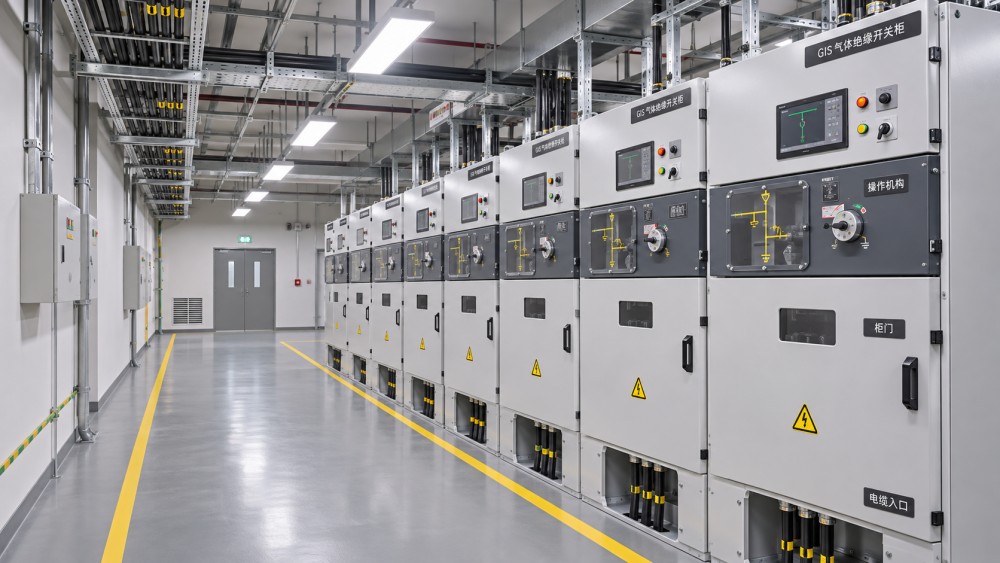
For an AI data center expansion inside an existing shell, a smaller electrical room may preserve space for other infrastructure or avoid an extension to the building. On a greenfield campus with room in the substation, the same reduction may have little immediate value. The decision depends on what the space can actually be used for, not an assumed revenue value per square foot.
Compare the installed project, not the switchgear quote
AIS often has a lower equipment purchase price, while GIS generally carries a price premium. That is a useful starting assumption for budgeting, not a substitute for bids. Voltage, current and fault ratings, lineup configuration, protection equipment, local manufacturing and commercial terms can change the comparison.
The cost boundary should extend from equipment procurement through energization. A smaller lineup may reduce building area or civil work, but GIS can introduce different requirements for transport, specialized installation, gas-related services or replacement parts. AIS may need a larger room, more extensive on-site assembly or different environmental controls. Neither list applies automatically to every product.
A disciplined comparison includes at least these project-specific allowances:
- Equipment, protection, controls, metering and interfaces with the utility and facility systems.
- Building or enclosure changes, foundations, cable routes, ventilation and any arc-relief provisions.
- Freight, unloading, installation, testing, commissioning and required supplier attendance.
- Training, recommended spares, service agreements and planned maintenance over a stated period.
- Future extension work and the operational cost of any outage needed to carry it out.
Use the same currency, tax treatment, schedule assumptions and risk allowances for both options. If one supplier excludes cable terminations or commissioning support, those costs must be added before the quotes are compared. Keep contingency visible rather than hiding it in a single all-in figure; that makes it easier to see whether the apparent saving depends on an uncertain building estimate or an unconfirmed delivery date.
Check electrical equivalence before comparing footprints
Two lineups are not equivalent simply because they serve the same nominal voltage. The engineering basis should also specify continuous current, short-circuit withstand and interruption requirements, bus arrangement, protection scheme, control supply and interfaces. The number of incomers, bus couplers, outgoing feeders and spare ways matters as much to the room layout as the insulation method.
For a data center, define the position of the switchgear in the power chain. Utility-facing substation equipment and medium-voltage distribution inside a campus may have different ownership, access and approval requirements. A utility may require particular protection interfaces, witnessing or equipment acceptance. Confirm those conditions early: a technically attractive lineup is not useful if it cannot be connected under the agreed scheme.
Request evidence against the applicable IEC or IEEE standards and local requirements identified in the project specification. The relevant standard and test scope depend on the equipment and jurisdiction; a general statement that equipment is “compliant” does not establish that the proposed configuration has the ratings or tested arrangements the project needs.
Maintenance savings need an access plan
Enclosed gas-insulated compartments can limit exposure of insulated components to the surrounding environment. That may be attractive where dust, humidity or other site conditions complicate upkeep. It does not make the complete installation maintenance-free. Breaker mechanisms, controls, protection devices, cable connections and auxiliary systems still need attention according to the equipment design and operating conditions.
AIS can offer more accessible components in some configurations, but accessibility is useful only when staff can isolate the equipment safely and obtain an outage window. In a live data center, the critical question is often not how many hours a maintenance task takes on paper; it is whether the electrical architecture allows that task without interrupting the loads it serves.
Ask each supplier to walk through a credible failure or replacement scenario. What must be isolated? Can the affected unit be removed independently? Is a crane, handling frame or gas specialist required? Where are spare parts held, and what response is contractually available at the site? Compare those answers with the facility’s redundancy and switching procedures rather than treating the switchgear technology itself as a guarantee of availability.
Insulating gas changes the lifecycle calculation
Some GIS uses sulfur hexafluoride (SF6), a potent greenhouse gas; other designs use alternative insulating media. Do not assume that all gas-insulated equipment has the same environmental profile or handling requirements. Obtain the exact gas composition, expected handling procedures, monitoring provisions and end-of-life arrangements for the offered equipment.
Rules governing fluorinated gases and equipment placement vary by jurisdiction and can change. The project team should verify current obligations, applicable dates and any exceptions with local specialists and the supplier before procurement. Include the cost and availability of trained personnel, recovery equipment and disposal or recycling services where relevant.
An alternative gas is not a reason to skip the operational review. Check its service documentation, compatibility with the proposed ratings, local support and the availability of replacement modules throughout the intended asset life.
Delivery and expansion can outweigh the initial saving
Switchgear lead time is a project-specific supply-chain question, not a reliable advantage of GIS or AIS as a category. Factory capacity, component availability, testing slots, shipping constraints and approval cycles all matter. Obtain a schedule that separates drawing approval, manufacture, factory testing, delivery, installation and site acceptance. A quoted delivery date without those dependencies is difficult to manage.
Delivery is also not the same as usable capacity. A lineup may be on site while the utility connection, protection settings, transformer works or integrated testing remain incomplete. For a phased compute expansion, map the switchgear schedule to the date each block can be commissioned and energized, not merely to the date the equipment arrives.
Future expansion deserves the same scrutiny. A spare feeder position may be inexpensive during the initial build but disruptive to add later. GIS extensions can require specific interface arrangements and supplier involvement; AIS extensions can require reserved floor area and access. Ask whether the proposed lineup can be extended while adjacent sections remain energized, what outage is required, and whether future modules will fit through the building route. The answer depends on the exact design and site procedures.
Make the decision against the site constraint
GIS is worth serious consideration when a compact arrangement avoids a building extension, fits a constrained retrofit, or resolves an environmental exposure problem without creating unacceptable service dependence. AIS deserves a close look when room is available, the building cost is manageable, and the operator values the offered access and maintenance arrangements. Either option can fail the business case if its protection scheme, expansion path or delivery plan does not fit the project.
Before selecting a preferred design, put both supplier layouts on the same site drawing and reconcile the scope exclusions line by line. Then test the preferred option against one planned expansion and one maintenance outage. If the team cannot explain how those two events will be handled, the lowest quoted price is not yet a sound basis for the decision.
Questions about data center smoke detection standards? Contact RackLedger for further insights.
We respect your privacy. Your information is strictly confidential.
Recommended News
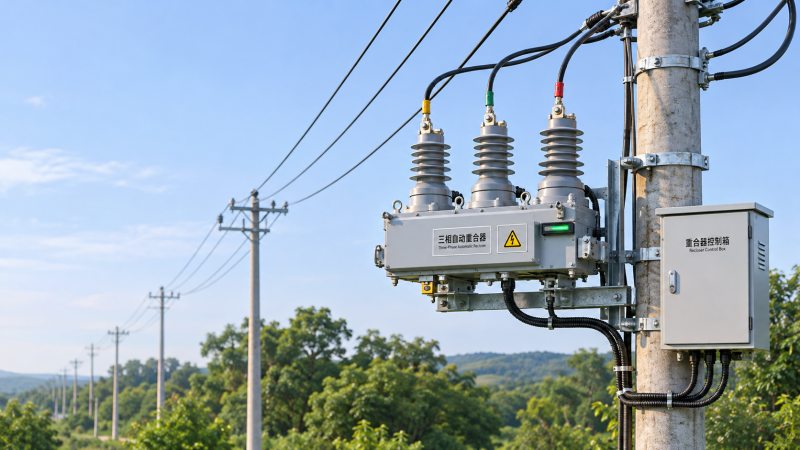
 How Automatic Reclosers Restore Power After Transient Line FaultsAutomatic Reclosers restore power after temporary line faults. Discover how reclosing sequences, protection settings, and lockout support grid reliability.Nov 04, 2026
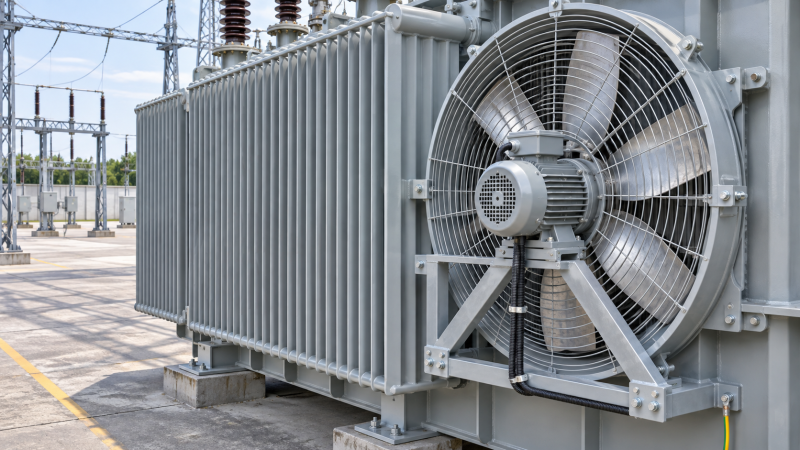
 Why Transformer Cooling Fans Fail and How to Diagnose Common FaultsTransformer Cooling Fans not working as expected? Learn how to diagnose common faults, check airflow and controls, and restore reliable cooling safely.Nov 04, 2026
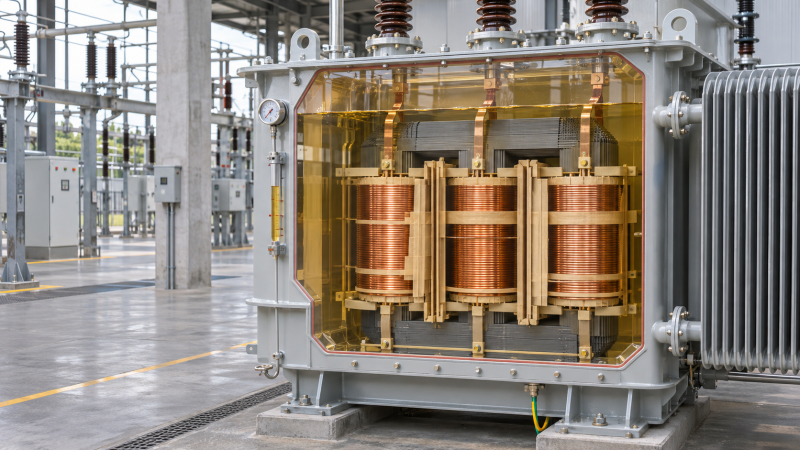
 What Is Transformer Oil? Insulation and Cooling Functions ExplainedTransformer oil supports electrical insulation and cooling. Discover how it works, how it is tested, and why its condition matters for power reliability.Nov 04, 2026
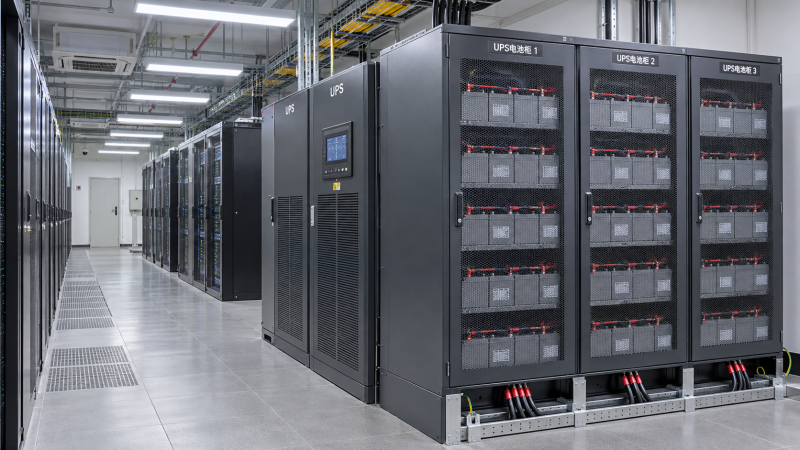
 Sodium-Ion UPS Batteries vs. Lithium-Ion: What Buyers Should CompareSodium-Ion UPS Batteries vs. lithium-ion: compare runtime, safety, compatibility and lifecycle costs to make a confident data center buying decision.Nov 04, 2026