Related Industries
Curation by industry experts
Hot Articles
Popular Tags
Sodium-Ion UPS Batteries vs. Lithium-Ion: What Buyers Should Compare
Sodium-Ion UPS Batteries are emerging as a potential alternative to lithium-ion systems, but chemistry alone does not determine whether they are suitable for a data center. Technical evaluators need to compare discharge performance, safety, operating temperature, service life, and compatibility with existing UPS equipment under the conditions a facility will actually face. This article examines the evidence buyers should request, the integration and supplier risks to assess, and the full lifecycle costs that can shape a reliable procurement decision.
The practical question is not whether sodium-ion is better than lithium-ion in the abstract. It is whether a particular battery system can support the required UPS output, for the required time, at the end of its service life—and whether the facility can install, maintain and replace it without creating a new reliability problem.
Start with the discharge duty, not the energy rating
A UPS battery is often selected to deliver substantial power for a short period, such as the interval before generators accept load or an orderly shutdown is completed. A battery’s nominal kilowatt-hour rating does not, by itself, establish how many minutes of backup it can provide at the required UPS output.
Ask suppliers for discharge curves and a sizing calculation for the complete proposed configuration. The calculation should identify the UPS load, required autonomy, operating temperature, DC voltage limits, conversion losses, battery age and any design margin. Confirm whether the stated runtime is at the UPS output or at the battery terminals: those are different boundaries.
For an AI facility, use the actual protected-load profile rather than assuming that the nameplate rating of every rack is continuously drawn. Equally, do not size only against a favorable average. High-density computing can produce changing demand, and the relevant battery duty depends on what the UPS must supply during a utility interruption, including any protected cooling or controls.
A sodium-ion offer with an attractive energy price may require more cabinets to meet a short, high-power discharge. A lithium-ion proposal may also need additional capacity once aging and temperature are included. Compare the resulting installed systems, not just the cells.
The DC interface can decide a retrofit
Existing UPS equipment was designed around a permitted DC voltage window, charging behavior, protection scheme and communications interface. Sodium-ion cells have different voltage characteristics from lithium-ion cells, but the implications depend on the specific cell and system design. A compatible nominal voltage on a brochure is not proof that the battery remains within UPS limits throughout charge and discharge.
Have the UPS manufacturer and battery supplier review the full operating envelope together. This includes maximum charging voltage and current, end-of-discharge voltage, recharge time, current limits, isolation, fault protection and the behavior of contactors. Check what happens after a battery-management-system alarm or communications failure: does the UPS continue operating, transfer, restrict charging or disconnect the battery?
Responsibility matters as much as the interface. If the UPS supplier supports the battery only with a particular firmware version or integration kit, put that condition in the quotation. For a retrofit, establish who approves the final configuration, who investigates a nuisance trip and whether the change affects existing warranties or service agreements.
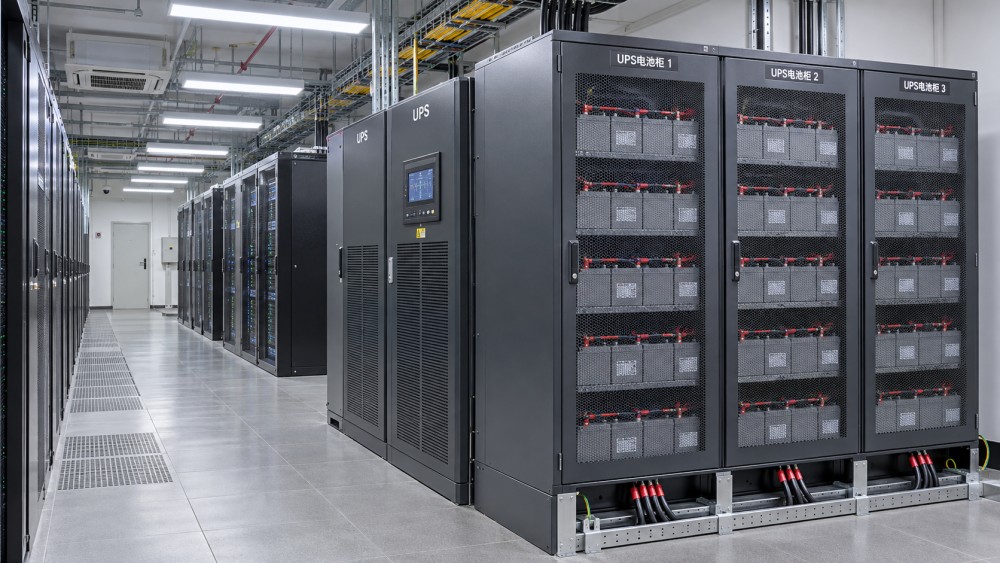
The physical path deserves the same scrutiny. Cabinet dimensions, floor loading, access clearances, cable routes and lifting arrangements can turn a seemingly straightforward replacement into a switchroom modification. A battery with lower cell-level energy density is not automatically unsuitable; the question is whether the complete installation fits without compromising maintenance access or redundancy.
Compare safety at system level
Sodium-ion and lithium-ion each cover multiple cell designs, electrolytes and packaging approaches. Safety claims about one product should not be extended to an entire chemistry. In particular, “sodium-based” is not a substitute for evidence about thermal events, electrical faults, gas release or how a cabinet behaves when a cell fails.
Request test reports for the proposed cell, module and battery system, including the configuration and conditions tested. Ask what failures were initiated, what propagated, what gases or other hazards were observed, and which protective devices were active. A cell test can be useful, but it does not necessarily establish the behavior of a populated cabinet installed alongside others.
The applicable requirements depend on jurisdiction, installation and equipment scope. The project team should confirm relevant product certification, electrical and fire-code requirements with the authority having jurisdiction, insurer and qualified engineers. Verify the scope of any certificate rather than accepting a logo as evidence that the entire proposed installation is approved.
Also agree on the operating response: alarm routing, isolation, ventilation, emergency access, damaged-battery handling and return-to-service procedures. If the supplier’s safety strategy assumes a room layout or suppression arrangement that the facility cannot provide, that is an integration issue—not a detail to resolve after delivery.
Temperature and aging change the usable capacity
A broad published temperature range can be misleading. Separate the permitted ranges for storage, discharge and charging, then ask how performance and warranty conditions change within each range. A battery that can discharge at a given temperature may still require restricted charging or additional thermal management.
Consider the battery room during both normal operation and an extended facility upset. Cooling availability, heat from adjacent equipment and uneven cabinet temperatures can influence performance. If a proposed battery reduces cooling requirements, verify the claim against its actual operating limits and the room design rather than assuming the facility cooling load will fall.
Service life needs the same discipline. UPS batteries may spend much of their time charged and waiting, so calendar aging can matter even when discharge cycles are rare. Request the capacity-retention assumptions for the expected temperature, state of charge, charge regime and duty cycle. Ask whether the supplier’s end-of-life definition still supports the required UPS runtime, not merely whether the battery remains operational.
Warranty language should specify the measurement method, exclusions and remedy. A capacity warranty may not cover an application in which the system can no longer deliver the required short-duration power. That distinction is worth resolving before the purchase order.
Treat supplier maturity as an engineering input
A newer chemistry may offer supply-chain diversification, but access to sodium-containing materials does not by itself guarantee available cells, qualified modules or local service. Manufacturing yield, electrolyte and component sourcing, battery-management electronics, shipping arrangements and regional support still affect delivery.
Ask which elements are already in production and which remain planned. Distinguish a laboratory result, a pilot installation and a commercially supported UPS configuration. Request documentation for the exact model and revision being quoted, along with lead times for spare modules, control boards and replacement cabinets. If a supplier proposes a future software feature or certification, identify it as a dependency rather than a completed capability.
A strong technical offer can still be a poor fit for a remote site if trained service personnel and replacement parts are unavailable within the operator’s recovery window. Conversely, an established lithium-ion supplier’s installed base does not eliminate the need to verify support for the specific product and location.
Build the comparison around the installed lifecycle
A useful bid comparison starts with the same UPS output, autonomy, redundancy, environmental conditions and end-of-life requirement. Then include the costs needed to make each option operational. Price per kilowatt-hour is a reference point, not the decision.
- Installation: cabinets, protection, cabling, structural work, room changes, integration and commissioning.
- Operations: monitoring, inspections, service contracts, training, energy losses and any battery-specific cooling or ventilation.
- Replacement: expected replacement timing, spare parts, labor, disposal or recycling, and the operational cost of taking equipment out of service.
- Risk and schedule: approval lead time, supplier support, delivery commitments and contingencies if the proposed configuration is delayed.
Use consistent assumptions for the analysis period, electricity price, discounting and replacement schedule. Show uncertain items as scenarios instead of hiding them in a single precise-looking total. For example, a lower initial battery quote may cease to be compelling if it requires a larger room or a disruptive replacement during the facility’s planned operating life.
What to put in the request for quotation
Give each bidder the same load profile, required backup time, UPS model or performance specification, site conditions and maintenance constraints. Require a system-level drawing and a written list of assumptions, exclusions and third-party approvals. For a proposed retrofit, include existing single-line diagrams and the planned outage window.
The acceptance plan should be agreed before procurement. Define the factory and site tests, alarm and communication checks, protection tests, documentation and training to be delivered. Where a full-load runtime test is impractical or introduces unacceptable operational risk, specify an agreed alternative test method and how the supplier will substantiate the runtime calculation. Any test involving critical loads needs an approved switching and rollback plan.
Sodium-ion is worth evaluating when a supplier can demonstrate a supported system against the actual UPS duty and site constraints. Lithium-ion may remain the more straightforward choice where documented compatibility, local service or deployment timing is decisive. If the evidence for either option stops at cell-level claims, the next step is not a chemistry decision—it is a request for system-level data and a clear integration owner.
Questions about data center smoke detection standards? Contact RackLedger for further insights.
We respect your privacy. Your information is strictly confidential.
Recommended News
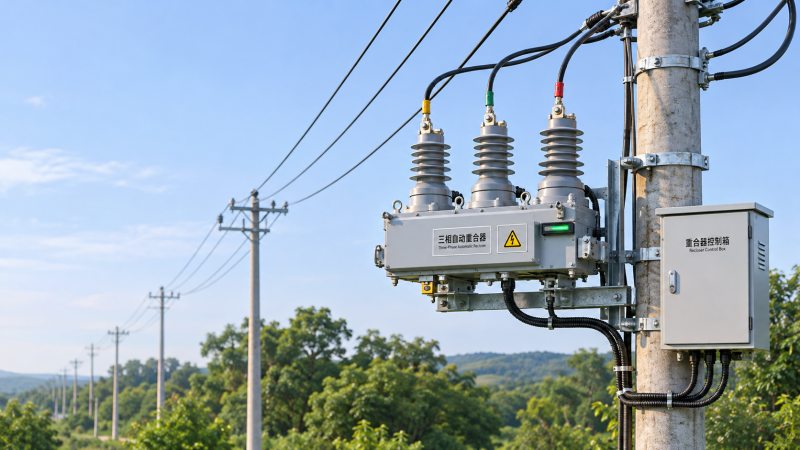
 How Automatic Reclosers Restore Power After Transient Line FaultsAutomatic Reclosers restore power after temporary line faults. Discover how reclosing sequences, protection settings, and lockout support grid reliability.Nov 04, 2026
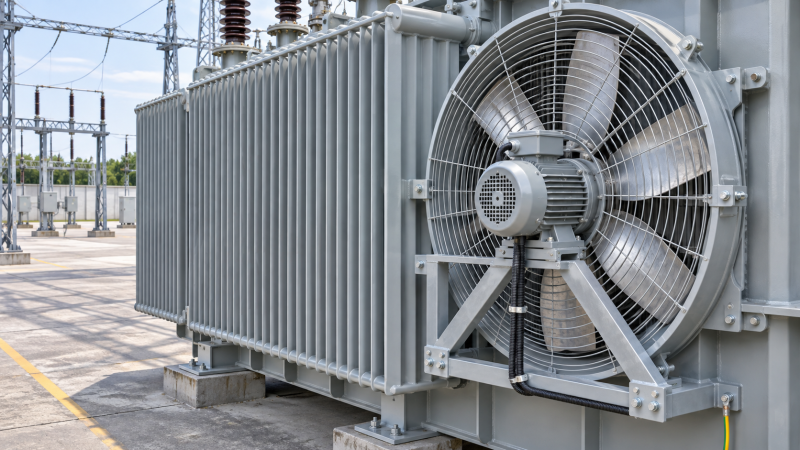
 Why Transformer Cooling Fans Fail and How to Diagnose Common FaultsTransformer Cooling Fans not working as expected? Learn how to diagnose common faults, check airflow and controls, and restore reliable cooling safely.Nov 04, 2026
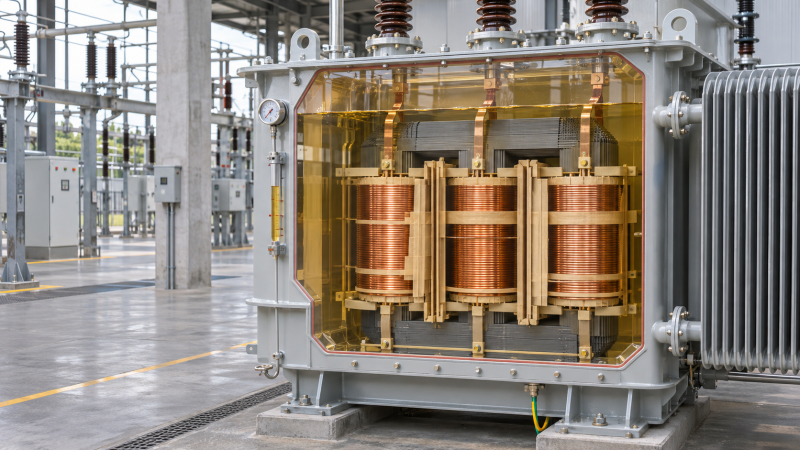
 What Is Transformer Oil? Insulation and Cooling Functions ExplainedTransformer oil supports electrical insulation and cooling. Discover how it works, how it is tested, and why its condition matters for power reliability.Nov 04, 2026
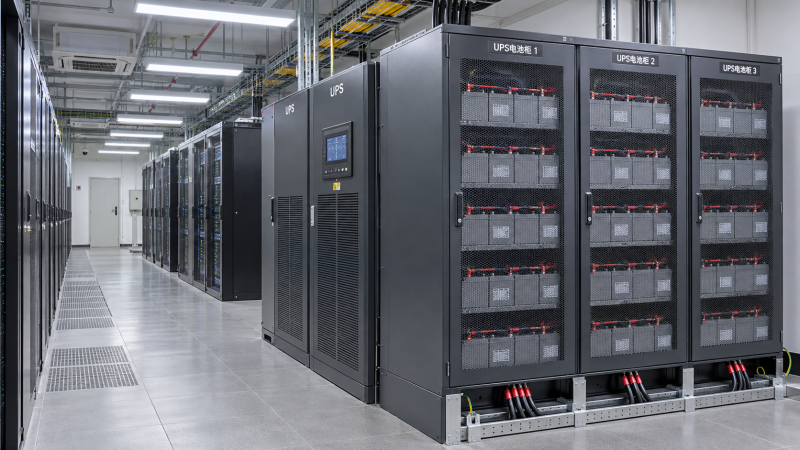
 Sodium-Ion UPS Batteries vs. Lithium-Ion: What Buyers Should CompareSodium-Ion UPS Batteries vs. lithium-ion: compare runtime, safety, compatibility and lifecycle costs to make a confident data center buying decision.Nov 04, 2026