Related Industries
Curation by industry experts
Hot Articles
Popular Tags
What Is Transformer Oil? Insulation and Cooling Functions Explained
Transformer oil is a dielectric fluid that helps power transformers operate by insulating internal components and carrying heat away from windings and the core. It is easy to overlook because it sits inside sealed equipment, but its condition can affect the reliability of the electrical path supplying a data center. For operators and infrastructure researchers, understanding what the fluid does—and what it cannot do alone—makes transformer maintenance, procurement, and power distribution risks easier to assess.
What is transformer oil made for?
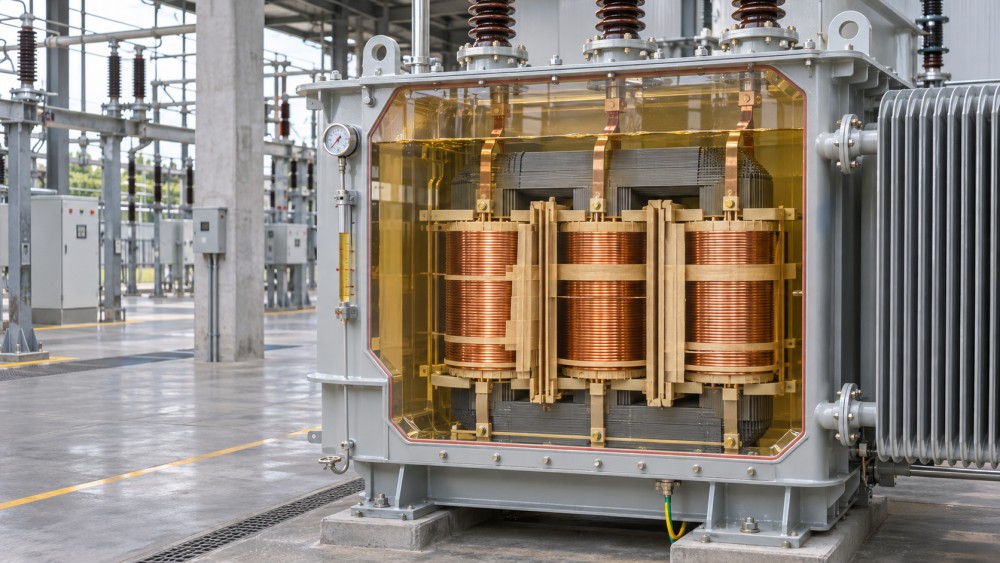
Transformer oil is a liquid used in many electrical transformers to support insulation and cooling. It fills much of the space inside the transformer tank, surrounding the core, windings, and solid insulation. The most familiar type is refined mineral oil, although other insulating liquids, including ester-based fluids, are also used in suitable equipment.
The word “oil” can suggest a lubricant, but lubrication is not its primary job here. A transformer transfers electrical energy between circuits through electromagnetic induction. That process creates heat, while the voltage differences between internal parts demand careful insulation. The liquid addresses both conditions.
Not every transformer contains oil. Dry-type transformers use air and solid insulation instead. The choice depends on factors such as installation conditions, fire protection requirements, efficiency, maintenance access, and the equipment design.
How does transformer oil provide electrical insulation?
Inside a transformer, conductors and other components can operate at different electrical potentials. Insulating liquid occupies spaces around these parts and, together with solid insulation and the transformer’s physical clearances, helps prevent unwanted electrical discharge.
Oil also impregnates porous cellulose insulation used around many windings. This helps reduce air-filled gaps where electrical stress could contribute to partial discharge. The fluid is therefore part of an insulation system, not a substitute for properly designed paper, pressboard, clearances, and other insulating components.
A useful measure of liquid condition is dielectric breakdown voltage: the voltage at which a sample breaks down under a defined laboratory test. Moisture, particles, and other contamination can reduce this value. However, a satisfactory breakdown test does not prove that the entire transformer is healthy; it describes one property of the sampled liquid under specified test conditions.
Electrical insulation also changes with age. Heat, oxygen, moisture, and electrical stress can contribute to deterioration of the liquid and solid materials. Keeping the fluid clean and dry helps preserve the insulating system, but it cannot reverse all damage already done to cellulose insulation.
How does transformer oil cool the equipment?
Transformer losses produce heat in the windings and core. The surrounding liquid absorbs some of that heat and moves it toward cooler surfaces, commonly radiators attached to the tank. Heat then passes to the surrounding air, or to another cooling medium through equipment designed for that purpose. The cooled liquid returns toward the warmer internal components, completing the circulation path.
Movement can occur naturally as warmer, less dense liquid rises and cooler liquid descends. Larger or differently designed installations may use pumps, fans, or both to increase heat removal. The transformer’s cooling designation and rating identify the intended arrangement; the presence of oil alone does not tell an operator how much load the unit can safely carry.
Cooling performance depends on more than the liquid. Ambient temperature, radiator condition, fan or pump availability, loading, and the design of internal oil passages all matter. A restricted radiator or failed fan can raise operating temperatures even when the oil itself is in good condition.
For a data center, this distinction is important. Rising IT demand may increase transformer loading, but a nameplate rating must be interpreted alongside the specified cooling mode, site conditions, redundancy arrangement, and expected load profile. Average demand and short-duration peaks are not interchangeable.
Mineral oil and ester fluids: what is the difference?
Mineral oil is widely used in liquid-filled transformers and has a long operating history. Ester fluids are another category of dielectric liquid; they include natural esters, typically derived from vegetable oils, and synthetic esters. Both categories can provide insulation and heat transfer when used in equipment designed or approved for them.
A higher fire point does not eliminate the need for fire safety engineering. Likewise, choosing an ester does not automatically make a transformer suitable for every indoor or environmentally sensitive location. Site rules, containment, protection systems, and the specific fluid’s documentation still apply.
Retrofilling an existing transformer with a different liquid is a separate engineering decision. Residual fluid, seals, cooling performance, operating temperatures, and maintenance procedures may all need evaluation. Fluid types should not be mixed simply because both are described as transformer oil.
Which oil properties matter during operation?
Transformer oil is expected to retain useful electrical and thermal characteristics over years of service. Several properties help engineers judge whether it remains fit for its intended role:
- Dielectric strength: indicates resistance to electrical breakdown in a specified test and can be affected by water or particles.
- Moisture content: matters because water can weaken insulation and influence cellulose aging. Temperature and the distribution of moisture between liquid and paper complicate interpretation.
- Acidity and oxidation products: rising acidity and other signs of oxidation can indicate fluid aging. Advanced deterioration may contribute to deposits or sludge.
- Interfacial tension: changes can provide another indication of certain dissolved aging products, particularly when considered alongside other tests.
- Viscosity and low-temperature behavior: influence how readily a fluid circulates, especially during cold starts and under the transformer’s designed operating conditions.
No single property tells the whole story. A sample result is most useful when considered against the fluid type, sampling temperature, equipment history, operating conditions, and the laboratory method. A trend across comparable samples may reveal a developing issue that one isolated result cannot.
What can oil testing reveal about a transformer?
Routine testing examines both the liquid and clues carried within it. One widely used technique, dissolved gas analysis (DGA), measures gases that can form when insulation materials are exposed to thermal or electrical stress. The types, concentrations, and rates of change of these gases can help specialists investigate conditions such as overheating or electrical discharge.
DGA is not a photograph of a fault. Gas interpretation depends on transformer design, operating history, fluid type, previous treatment, and sampling quality. An unusual result may call for a repeat sample, additional electrical tests, or an inspection rather than an immediate conclusion about the precise location or severity of a problem.
Other tests may look for moisture, acidity, breakdown voltage, and indicators associated with cellulose degradation, such as furan compounds. These measurements have different purposes. Some primarily describe liquid condition; others provide indirect evidence about solid insulation. Together with temperature records, load history, and maintenance observations, they give a more useful picture than any one number alone.
What happens when the oil deteriorates?
Depending on the cause and condition, a specialist may recommend filtration, drying, degassing, reclamation, or replacement of the fluid. Each treatment addresses different issues. Removing particles is not the same as restoring oxidized oil, and treating the liquid does not necessarily restore aged winding insulation.
Leaks deserve attention for a different reason: they can reduce liquid level, create environmental and fire risks, and permit contamination under some conditions. The appropriate response depends on the transformer design, leak rate, location, and site procedures. Work on energized or pressurized equipment must be left to qualified personnel following the relevant safety requirements.
Why transformer oil matters in data center power planning
Liquid-filled transformers may appear at several points along a data center’s electrical supply path, from utility or campus substations to distribution equipment serving facility loads. Their oil condition is one element of transformer reliability, alongside protection, cooling equipment, electrical connections, and maintenance practices.
For an operator planning an expansion, the practical question is not just whether a transformer is installed. Can it support the intended load under the site’s temperature and cooling conditions? Is there a documented testing history? Are spare parts, replacement equipment, and qualified service available within the required timeframe? If a unit must be taken out of service, does the electrical design provide the expected level of redundancy?
Researchers assessing a project should also distinguish between transformer capacity on paper and capacity that has been delivered, installed, commissioned, and placed into service. Oil testing alone cannot establish readiness, but fluid condition and maintenance records can contribute to a broader assessment of an operating asset.
Common questions about transformer oil
Is transformer oil the same as coolant used for servers?
No. Transformer oil is formulated for use as an electrical insulating and heat-transfer fluid in suitable equipment. Data center liquid-cooling systems may use water-based coolants or other fluids selected for their own components and operating conditions. A transformer fluid should not be assumed compatible with server immersion systems, seals, pumps, or warranties.
Does transformer oil need to be changed on a fixed schedule?
Not necessarily. Service decisions are often based on condition, equipment history, operating risk, and manufacturer or operator guidance rather than time alone. Sampling frequency and action limits should reflect the transformer’s design and importance, as well as the applicable maintenance standards.
Can clean-looking oil still have a problem?
Yes. Dissolved moisture, gases, and chemical aging products may not be visible. Conversely, appearance alone does not identify the cause or extent of a problem. Laboratory testing and expert interpretation are needed to assess properties that cannot be judged by sight.
Transformer oil is best understood as a working part of a larger insulation and cooling system. Its condition matters, but so do the solid insulation, cooling hardware, operating environment, and electrical design around it. Considering those pieces together gives a clearer view of both transformer health and the power infrastructure that depends on it.
Questions about data center smoke detection standards? Contact RackLedger for further insights.
We respect your privacy. Your information is strictly confidential.
Recommended News
 How Automatic Reclosers Restore Power After Transient Line FaultsAutomatic Reclosers restore power after temporary line faults. Discover how reclosing sequences, protection settings, and lockout support grid reliability.Nov 04, 2026
 Why Transformer Cooling Fans Fail and How to Diagnose Common FaultsTransformer Cooling Fans not working as expected? Learn how to diagnose common faults, check airflow and controls, and restore reliable cooling safely.Nov 04, 2026
 What Is Transformer Oil? Insulation and Cooling Functions ExplainedTransformer oil supports electrical insulation and cooling. Discover how it works, how it is tested, and why its condition matters for power reliability.Nov 04, 2026
 Sodium-Ion UPS Batteries vs. Lithium-Ion: What Buyers Should CompareSodium-Ion UPS Batteries vs. lithium-ion: compare runtime, safety, compatibility and lifecycle costs to make a confident data center buying decision.Nov 04, 2026