Related Industries
Curation by industry experts
Hot Articles
Popular Tags
Choosing Server Rack Vibration Dampers for Sensitive IT Equipment
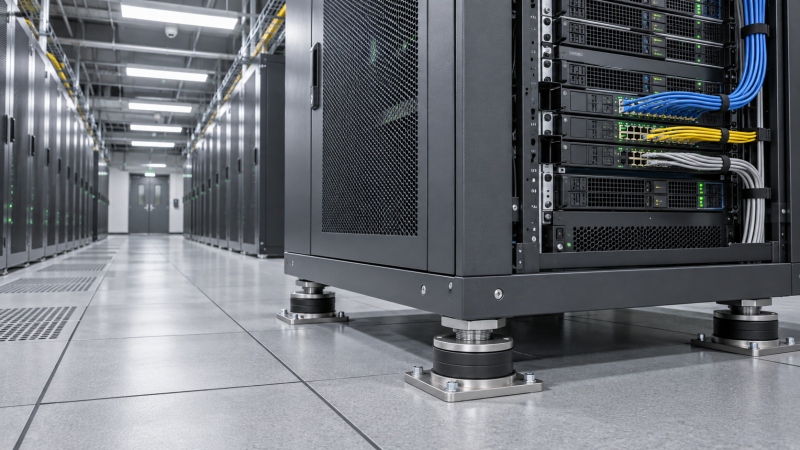
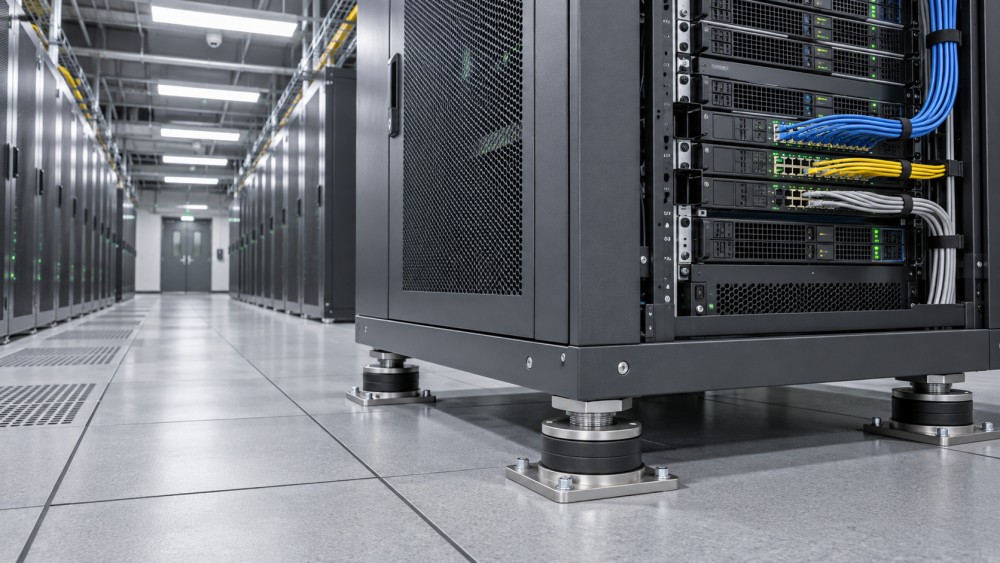
Choosing Server Rack Vibration Dampers requires more than comparing product ratings. For sensitive IT equipment, effective isolation depends on the vibration source, its frequency, rack weight, load distribution, and the operating environment. An unsuitable damper can amplify movement or complicate installation and maintenance. This guide examines the technical criteria, supplier evidence, and facility constraints that evaluation teams should consider when assessing vibration control options for data center and edge deployments.
Start with the vibration, not the damper
A rack can be exposed to vibration from building mechanical systems, nearby rotating equipment, traffic, construction, or the devices mounted inside it. Those sources do not all call for the same response. A persistent narrow-frequency vibration from machinery is a different engineering problem from intermittent floor shocks or vibration generated by a rack-mounted fan.
That distinction matters because a mount installed beneath the rack primarily addresses vibration transmitted through the floor. It will not necessarily solve vibration produced inside the rack, and it may allow the enclosure to move more freely in response to internal forces. If a particular drive shelf, switch, or server is showing a problem, investigate the equipment and its mounting as well as the building.
Begin with the equipment manufacturer’s operating vibration limits and any available measurements at the intended location. Check whether those limits describe acceleration, velocity, displacement, frequency range, or a test profile. A single overall reading may conceal a troublesome frequency peak. Measurements should also distinguish normal operating conditions from exceptional events, such as generator testing or adjacent construction.
If the concern is a performance symptom rather than a known vibration source, establish other plausible causes before specifying isolation. Storage errors, for example, may require investigation of drives, airflow, firmware, mounting hardware, and environmental conditions. Adding dampers without establishing a connection to vibration can make diagnosis harder.
Understand what the isolation system will actually do
An isolation mount acts as part of a mass-and-spring system. Its behavior depends on both the mount and the load it supports. Near the system’s natural frequency, transmitted movement can be amplified; at sufficiently higher frequencies, a suitably designed system can reduce transmission. Damping can limit the resonance peak, but it also affects isolation behavior at higher frequencies. These are trade-offs, not characteristics that can be judged from a maximum load rating alone.
The direction of vibration matters, too. Vertical performance should not be assumed to represent horizontal or rotational performance. A rack is tall, its mass is distributed unevenly, and the cabinet can flex. A simple calculation is useful for screening options, but it does not capture every mode of a populated rack and its connections.
Ask suppliers for transmissibility or equivalent performance information across the relevant frequency range, with the load and test direction stated. A claim such as “reduces vibration” is not enough to establish whether the mount helps at the frequencies measured on site. Where the input is shock or random vibration rather than a steady sinusoidal source, request evidence appropriate to that excitation instead of treating a single-frequency curve as a complete answer.
Calculate the load at each support point
The rack’s nameplate capacity is not the same as its installed weight. Build the load estimate from the cabinet, servers, storage, power distribution units, cable management, and any other equipment supported by the mounts. Include realistic future configurations, but do not size only for a fully populated rack if it will spend months operating at a much lower weight.
Dividing total weight by four gives an initial estimate for a four-point installation, not proof of the load at each corner. Heavy equipment may sit toward the front or rear; a raised center of gravity can also change loads during movement. Where practical, weigh support points or use a documented load-distribution calculation. The supplier should identify the acceptable operating load range for each mount, not just its ultimate capacity.
Check static deflection at both the initial and planned loads. A mount that is too stiff for a lightly populated rack may offer little isolation in the frequency range of interest. One that is overloaded may bottom out, tilt, creep excessively, or lose the intended clearance. Confirm how the design accommodates equipment changes, including whether mounts can be adjusted or replaced without unloading the entire rack.
Dynamic and service loads deserve separate attention. Extending a heavy server on rails changes the load distribution and can increase the risk of tipping. The rack manufacturer’s service procedures, anti-tip requirements, and permitted equipment extension remain applicable after isolators are added. A mount rated for the static rack weight is not automatically an approved anti-tip or anchoring solution.
Compare mount types against the site constraint
Elastomeric mounts are often considered where installation height and maintenance simplicity matter. Their performance depends on the material, geometry, temperature, load, and aging behavior. Request data for the actual operating range and ask how compression set, chemical exposure, or long-term creep may affect replacement intervals.
Spring-based isolators can be suitable where a lower natural frequency is required and there is room for greater deflection. They may also require separate damping, travel limits, lateral restraint, or carefully designed connections. More movement is not automatically better: it must remain compatible with rack stability, cables, pipework, and the facility’s safety requirements.
Other approaches include isolated platforms or equipment-level mounts. A platform may help distribute loads and provide a defined interface, but it adds height, weight, floor-loading implications, and another assembly to inspect. Equipment-level isolation can target a sensitive device without moving the whole cabinet, provided the device manufacturer permits it and cooling, grounding, and service access remain acceptable.
No material category guarantees a particular outcome. Compare complete assemblies using the same site inputs, rack configurations, and acceptance criteria. A compact mount with limited deflection may be practical in a constrained edge enclosure; a larger system may be justified where measured low-frequency floor motion is the dominant issue. Neither choice is defensible without checking the relevant frequency response.
Look for rigid paths that bypass the mounts
A rack can be isolated at its base and still be coupled to the building through overhead cable trays, rigid conduit, adjacent cabinets, containment panels, or cooling connections. These paths can transmit vibration around the mounts or restrict the movement the isolation system needs to work. They can also introduce unexpected forces into connectors as the rack settles.
This is particularly relevant to high-density AI installations. Liquid-cooling hoses and manifolds must accommodate the approved range of rack movement without exceeding bend-radius, support, or connection limits. Electrical feeds, grounding conductors, and network cables need appropriate slack and strain relief while remaining compliant with the equipment design and applicable local requirements. Flexibility must never be achieved by compromising protective bonding or creating an unsupported hose load.
Coordinate the design with the rack manufacturer, cooling supplier, electrical team, and structural engineer. Confirm who owns each interface. A damper supplier may be able to describe allowable movement at the mount, but that does not establish that a coolant connection or an overhead busway can tolerate it.
Resolve anchoring and floor questions before procurement
Isolation and restraint must be engineered together. In a location with seismic, wind, or other lateral-load requirements, a freely moving rack may not be acceptable. A rigid restraint added later can defeat isolation or transfer forces into components that were not designed for them. Ask the responsible engineer to determine the applicable requirements and whether an isolation assembly with designed restraints is needed.
The floor interface is equally important. Confirm concentrated loads, anchor locations, substrate condition, and access beneath a raised floor where relevant. A floor panel’s published load capacity does not by itself establish that a particular point load, pedestal arrangement, or anchor detail is acceptable. For an existing facility, installation may also require a maintenance window, temporary support, lifting equipment, and a plan for safely moving a populated rack.
Consider the finished height: even a modest increase can affect aisle containment, overhead clearances, cable reach, and alignment with neighboring racks. If the rack must remain movable on casters, determine whether the casters are removed from the load path in operation and how the transition between rolling and isolated states is performed.
Turn supplier claims into an acceptance plan
A useful quotation request describes the site rather than asking only for a damper sized to total rack weight. Provide the rack footprint, support locations, weight range, estimated center of gravity, vibration measurements, available clearance, environmental conditions, and required restraints. Identify cooling, power, grounding, and service interfaces that could limit movement.
In return, request a proposed layout and evidence that can be checked against those inputs. The most useful submissions address:
- Load range and expected deflection at each support, including the initial and planned rack configurations.
- Frequency-dependent behavior in the relevant directions, with test conditions and limitations.
- Maximum permitted movement, restraint details, anchoring assumptions, and service-position restrictions.
- Installation sequence, inspection criteria, replacement procedure, and expected effects of aging or environmental exposure.
- Lead time, spare availability, and any site-specific engineering or commissioning support included in the scope.
For acceptance, agree on measurement locations and operating conditions before installation. A practical approach is to record vibration at the supporting floor and at representative points on the rack, then repeat under comparable source conditions after installation. Measurements should cover the frequency range and directions that matter to the equipment. Where possible, assess the actual operating configuration rather than an empty cabinet.
The result needs interpretation. A change in a nearby machine’s operating speed, floor conditions, or rack loading can affect the comparison. Confirm sensor placement and measurement method, and investigate unexpected peaks rather than relying on one overall value. Acceptance should also include a physical inspection of clearances, restraints, connectors, and service access.
Make the decision on the complete installation
The lowest-priced mount may not be the lowest-cost solution once structural review, lifting, piping changes, downtime, and future replacement are included. Conversely, an elaborate platform is difficult to justify if the measured vibration is already within equipment limits or the real source is inside the cabinet.
RackLedger’s proposed coverage of data center and AI infrastructure applies the same broader test: a component specification is useful only when it is connected to the workload, facility interfaces, installation conditions, and operating plan. For a final selection, document the measured problem, compare supplier responses against the same load and frequency assumptions, and resolve anchoring and service access before committing to the hardware.
Questions about data center smoke detection standards? Contact RackLedger for further insights.
We respect your privacy. Your information is strictly confidential.
Recommended News
 Choosing Server Rack Vibration Dampers for Sensitive IT EquipmentChoose Server Rack Vibration Dampers with confidence. Explore load, frequency, anchoring, and supplier criteria for sensitive IT equipment.Nov 04, 2026
 How rack power density affects prefabricated data center rack capacityDiscover how rack power density affects prefabricated data center rack capacity, and learn to assess power, cooling, redundancy, and layout limits.Nov 04, 2026
 Server Chassis Airflow: Why Hot Spots Form and How to Fix ThemServer Chassis hot spots can develop even in cool data centers. Discover how to trace airflow issues, fix common causes, and verify cooling performance.Nov 04, 2026
 Choosing Server Rack Shelves: Load Capacity, Depth and MountingServer Rack Shelves made simple: compare load capacity, usable depth and mounting options to choose a safe, compatible shelf with confidence.Nov 04, 2026