Related Industries
Curation by industry experts
Hot Articles
Popular Tags
How energy use affects prefabricated data center lifecycle cost
Electricity can materially change the lifetime economics of a prefabricated data center. A lower purchase price may be offset by years of higher power and cooling losses; equally, an expensive efficiency upgrade may never recover its cost if the facility runs lightly loaded or electricity is inexpensive. The financial decision depends on the load the facility will actually serve, the tariff it will face, and the period over which the investment is evaluated.
For an approver comparing proposals, the most useful question is how much each option is expected to cost to deliver the same computing service over time. That requires a forecast of IT energy, facility overhead and electricity charges, followed by a comparison with the capital and maintenance costs needed to achieve those results.
Start with IT demand, then add facility overhead
The energy bill begins with the computing equipment. Servers, storage and networking draw power according to the equipment installed and the work it performs. Cooling, power conversion and other supporting systems add to that demand. A prefabricated facility may package these systems in factory-built modules, but its operating cost still depends on how the assembled site performs under its actual load and climate.
Power usage effectiveness, or PUE, is a common way to express the relationship between total facility energy and IT equipment energy over a defined period:
PUE = total facility energy ÷ IT equipment energy
For a simplified annual estimate, multiply annual IT energy by the expected annual PUE to obtain total facility energy. Multiplying that result by an assumed electricity price gives an approximate energy charge. This calculation is useful for screening proposals, provided the PUE covers the same boundary and operating period in each case.
Consider an illustrative facility with a constant average IT load of 500 kW over a full year. Its annual IT consumption would be 4.38 million kWh. At an assumed annual PUE of 1.30, total facility consumption would be 5.694 million kWh. At 1.50, it would be 6.57 million kWh. The difference is 876,000 kWh a year. At an illustrative flat electricity price of $0.10 per kWh, that is $87,600 annually before demand charges, taxes, maintenance and financing effects.
These are calculation assumptions, not performance claims or a forecast for a particular site. They show why a modest-looking change in PUE can carry a substantial dollar value at a sustained load. They also show why the same PUE difference is worth less when average IT consumption is lower.
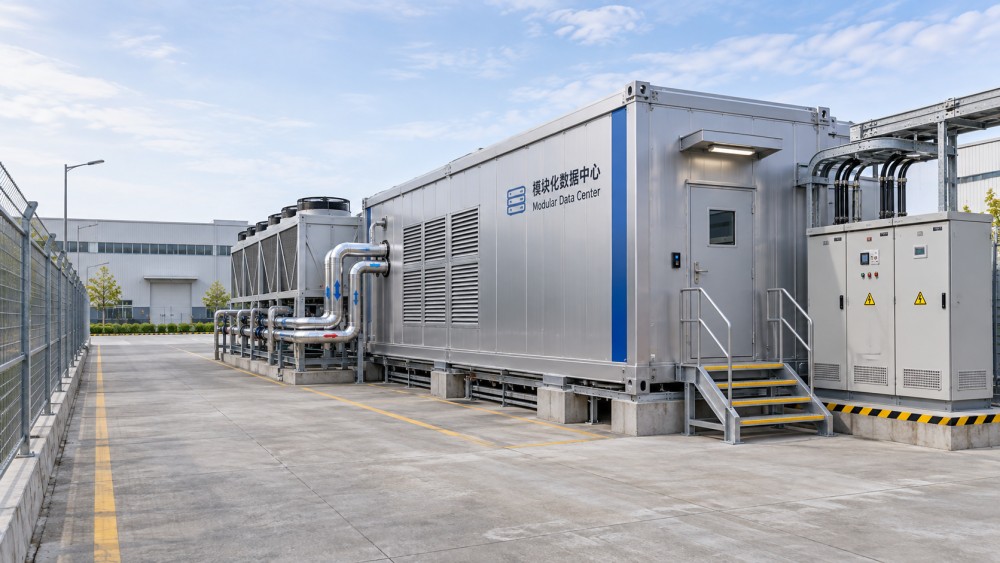
For prefabricated data center lifecycle cost, the comparison should cover more than the module itself. Depending on the project, costs may sit in the module contract, a separate site works package, a utility agreement or an operating budget. Include the energy and costs of equipment needed to deliver the same service, even when that equipment is purchased separately.
Test performance at the load the business expects
A design capacity of 1 MW does not establish that a facility will consume 1 MW of IT power throughout the year. Capacity describes what the system is designed to support; the financial model needs a forecast of average and peak demand, the ramp-up to that demand, and the expected operating hours.
That distinction matters when a prefabricated project is deployed in phases. A module may be commissioned ahead of the servers it will ultimately host. During the early period, some cooling, controls and electrical equipment may consume power even when IT demand is low. As a result, an efficiency figure quoted at a high load can make the first years look cheaper than they turn out to be.
Ask suppliers for expected facility energy or PUE at several load points relevant to the project, including the anticipated initial load. The estimates should state the outdoor conditions, redundancy configuration and equipment operating assumptions. If a proposal gives only one favorable operating point, use it as one input to the forecast, not as the annual result.
For an expansion serving variable AI workloads, the same caution applies to the IT forecast. Training and inference can have different utilization patterns, and the equipment’s nameplate rating is not a reliable substitute for an hourly or monthly demand profile. Where workload data is incomplete, finance can still model a range: a slower ramp, a base case and a higher-use case. Keeping the same workload assumptions across competing facility designs makes the comparison more meaningful.
PUE also says nothing by itself about how much useful computing work is performed per kWh of IT energy. A facility can improve its PUE while the computing equipment becomes less productive, or while IT energy rises. If the procurement decision includes both IT hardware and infrastructure, compare total electricity cost against a defined service or workload as well as against facility capacity.
Translate energy use into the bill the site will pay
A single price per kWh is convenient for early screening, but an actual electricity bill can depend on when power is consumed and how much capacity is drawn at peak. Two designs with similar annual kWh may produce different bills if one has a higher peak demand or shifts more consumption into expensive hours.
Build the forecast from the applicable utility tariff or a documented estimate of the anticipated contract. Separate, where applicable, energy charges, demand or capacity charges, fixed charges and other bill components. Check whether the quoted price includes taxes and network charges. A contract with time-dependent prices requires a load profile detailed enough to apply those prices; an annual average alone can conceal the effect.
Cooling makes this especially important. Facility energy can vary with outdoor conditions, and those conditions may coincide with periods of higher electricity prices or peak site demand. An annual PUE supplied for a different location or climate may therefore misstate both consumption and cost. Request performance estimates for the intended site and a clear explanation of how weather and part-load operation are represented.
Future electricity prices are uncertain, so avoid presenting one escalation rate as a known outcome. Test a range of price paths and show how much of the result is driven by tariff assumptions. Where a contract fixes a price for only part of the analysis period, distinguish the contracted years from later estimates. If a project expects a favorable tariff, confirm the conditions for obtaining and retaining it before using it as the base case.
Decide whether an efficiency premium pays for itself
An efficient design can cost more upfront through cooling equipment, electrical components, controls or integration work. The relevant comparison is the incremental investment against the incremental savings and costs over the same period, with both options meeting the same availability and capacity requirements.
Using the earlier example, suppose the lower-PUE option costs an additional $500,000 installed and saves $87,600 per year in energy charges under the flat-price assumptions. Simple payback would be about 5.7 years. That is a useful first filter, but it is not a complete investment case: it assumes the 500 kW average IT load and the efficiency difference persist from year one, and it excludes maintenance, replacement, demand charges and the time value of money.
A discounted cash-flow comparison gives the approver a fuller view. Set out each year’s expected energy bill, maintenance and other operating differences, together with the incremental capital outlay and any material replacement costs. Discount those cash flows using the organization’s investment criteria. Use the same analysis period, currency, tax treatment and assumptions about residual value for both options.
The result is sensitive to the deployment schedule. If load builds gradually, the early savings in the example fall with IT consumption, while the premium may be paid before commissioning. The opposite can also occur: a design that costs less to operate at the initial load may become less attractive when a later phase reaches higher utilization. Model the phases explicitly rather than applying the final-year savings to every year.
Also check whether an efficiency measure changes other costs. More complex controls or cooling arrangements may require different maintenance, spares or staff capability. Conversely, a design that reduces facility power demand may affect the size or timing of other infrastructure investments, but any such credit should be supported by the project design and utility arrangements. Do not count a theoretical reduction in capacity as a cash saving unless it actually changes a purchase or charge.
Put the assumptions into the approval package
A credible proposal lets finance trace the result from expected IT demand to the annual bill. Before approving an efficiency premium or selecting the lowest-priced module, request a comparison that includes:
- A common scope: module equipment, external cooling and power infrastructure, installation, commissioning and operating costs required for the same service.
- A load profile: initial and later-phase IT demand, average and peak load, operating hours and the expected timing of expansion.
- Performance evidence: the PUE measurement or estimation period and boundary, load points, site conditions, redundancy assumptions and supporting test or model documentation.
- A tariff model: energy and demand charges, fixed fees, applicable time periods and the assumptions used after any contracted price expires.
- An investment comparison: incremental installed cost, annual savings, maintenance and replacement differences, discounted cash flow and sensitivities for load, efficiency and electricity price.
Acceptance terms deserve attention as well. If supplier performance is a material part of the business case, define what will be measured after commissioning, at which boundary and operating conditions, and how the result will be assessed. A short test at one load can support acceptance of a specified operating point, but it cannot by itself establish annual PUE across changing loads and weather.
The strongest approval case is not necessarily the one with the lowest advertised PUE. It is the one that remains economically credible when the facility is loaded more slowly than planned, electricity prices change, and the cost of achieving the promised performance is fully included.
Questions about data center smoke detection standards? Contact RackLedger for further insights.
We respect your privacy. Your information is strictly confidential.
Recommended News
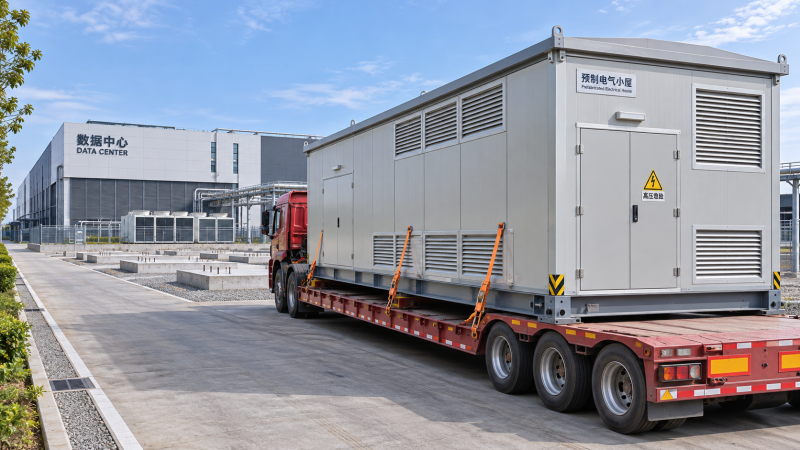
 Electrical House Substations: Budgeting for Transport and InstallationElectrical House Substations: Discover how to budget for transport, installation and commissioning, compare bids and avoid costly project surprises.Nov 04, 2026
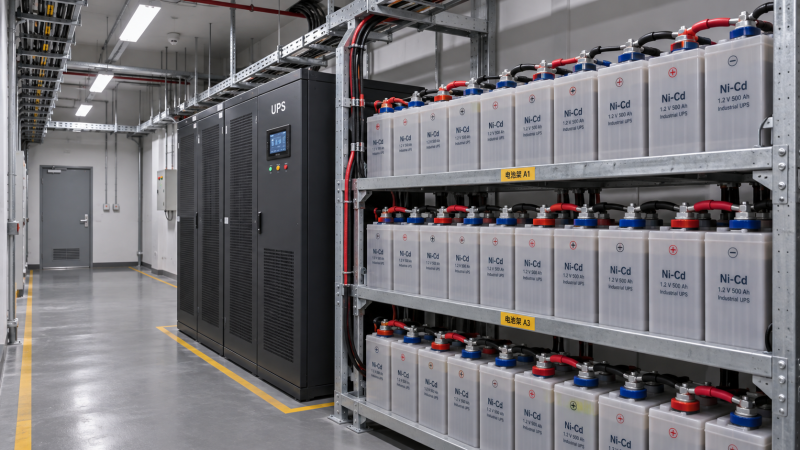
 Nickel-Cadmium UPS Batteries: Maintenance Costs and Service LifeExplore Nickel-Cadmium UPS Batteries, from maintenance costs and service life to disposal requirements, and find out if they’re worth the investment.Nov 04, 2026
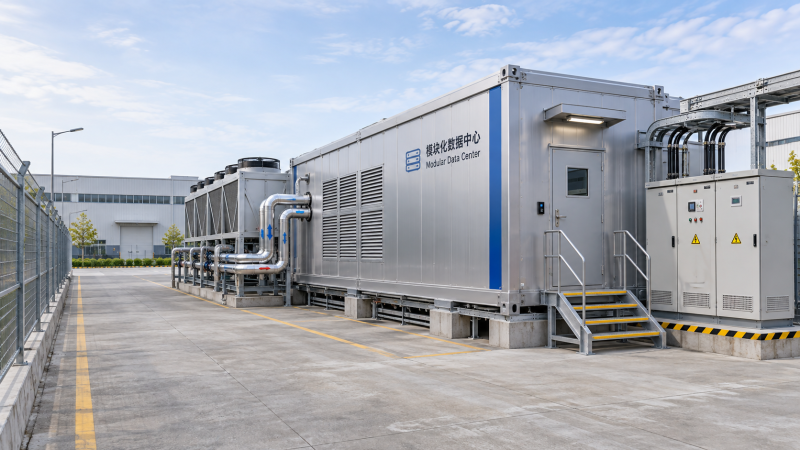
 How energy use affects prefabricated data center lifecycle costPrefabricated data center lifecycle cost depends on energy use, tariffs and workload. Learn how to compare options and make a stronger investment decision.Nov 04, 2026
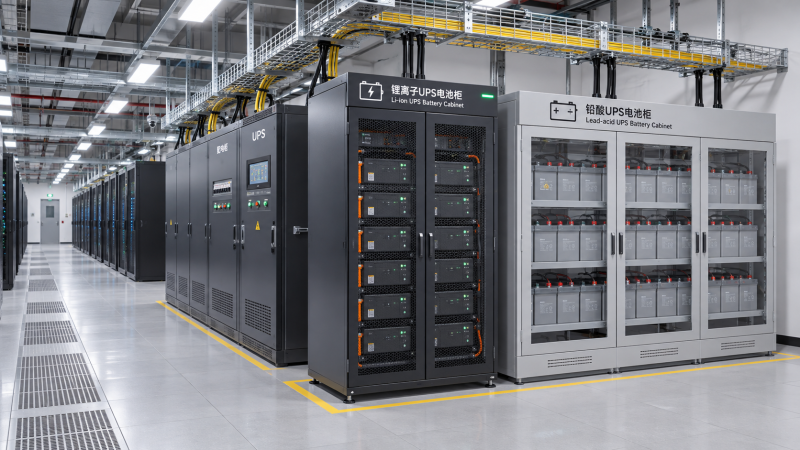
 Lithium-Ion UPS Batteries: Lifetime Cost Compared With Lead-AcidLithium-Ion UPS Batteries vs. lead-acid: compare lifetime costs, replacement needs, maintenance, and retrofit risks to make a smarter investment.Nov 04, 2026