Related Industries
Curation by industry experts
Hot Articles
Popular Tags
Data Center Servers: Calculating Total Cost of Ownership Before Purchase
The purchase price of data center servers is only one part of the investment. A reliable total cost of ownership calculation also accounts for energy, cooling, installation, maintenance, software, and eventual replacement. Workload demands, utilization, and existing facility capacity can all change the final cost. For procurement teams, the challenge is to compare supplier quotes on a consistent basis while identifying expenses that may sit outside the server budget.
Start with the workload, not the server configuration
A useful comparison begins with the work the equipment must perform over an agreed period. That might be a defined number of virtual machines, database transactions, storage operations, or AI inference requests. Include service requirements such as response time, availability, data protection, and expected growth. Without them, a lower-priced server may simply be a smaller or less capable purchase.
The comparison should also distinguish installed capacity from useful output. A high-performance system that remains lightly loaded can cost more per completed job than a less expensive configuration running at a steadier utilization. Conversely, consolidating workloads onto fewer machines may reduce support and power costs, but only if memory, storage, network bandwidth, and resilience requirements still fit.
Ask suppliers to size their proposals against the same workload assumptions. If one quote includes spare capacity for failover and another assumes every server is fully available, the difference is not a purchasing discount. It is a different operating model.
Build a cost model with a clear boundary
Choose a planning horizon that reflects the organization’s expected refresh cycle and support requirements. Then record when each cost occurs. A practical model includes the initial purchase, deployment expenses, recurring operating costs, and end-of-life costs, less any credible residual value. If finance requires a discounted cash-flow comparison, apply the same discount rate and timing assumptions to each option.
Total cost of ownership = acquisition + deployment + operating costs + end-of-life costs − residual value.
The boundary matters as much as the formula. Decide whether the model includes only incremental project costs or an allocation of existing shared infrastructure. Either approach can be useful, but mixing them will distort the result. An existing rack, for example, may not require a new purchase; that does not automatically mean its power and cooling capacity are free or available indefinitely.
Keep taxes, freight, customs charges, currency assumptions, and financing treatment consistent across bids. In a cross-border procurement, a quotation that excludes delivery to the final site can look competitive until import and local installation costs are added. Treat recoverable taxes consistently with the organization’s finance policy rather than assuming every tax is a permanent cost.
Estimate electricity from operating behavior
Nameplate power is useful for checking electrical design, but it is usually a poor substitute for expected average consumption. A server’s draw changes with workload, component configuration, power settings, and utilization. Request measured or otherwise substantiated power data for a configuration and workload close to the intended deployment; document where the supplier’s test conditions differ.
A basic annual estimate is: average IT power in kilowatts × operating hours per year × electricity price per kilowatt-hour. For a hypothetical server averaging 0.5 kW over 8,760 hours at $0.10 per kWh, the IT electricity cost is $438 per year. This is an arithmetic illustration, not a market price or a prediction of server consumption.
Where facility overhead is not already included, a power usage effectiveness (PUE) assumption can provide a rough estimate of total facility energy attributable to the IT load. Applying an illustrative PUE of 1.4 to that example gives 6,132 kWh, or $613.20 at the same energy rate. PUE should match the relevant site, measurement period, and boundary as closely as possible. It is a facility-level ratio, not a measure of useful computing output, and multiplying by it can double-count costs already included in a colocation power charge.
A flat energy price may also miss demand charges, time-of-use rates, contracted capacity, or local billing arrangements. Ask the facility or finance team which charges would actually change if the servers were installed. For a shared site, an allocated cost may be appropriate for internal comparison, but it should not be confused with a cash expense triggered by the purchase.
Check whether the building can accept the load
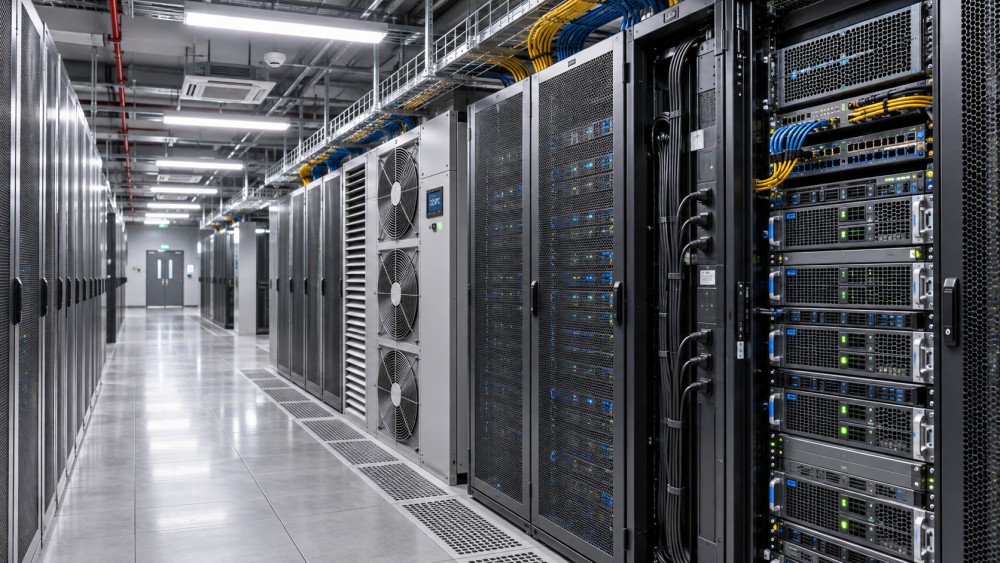
The most consequential hidden cost can be outside the server quote. Before selecting a high-density configuration, verify available rack power, circuit and distribution capacity, cooling capability, floor loading, physical clearances, and network connections. Check both average operating demand and peak or design requirements; an acceptable annual energy estimate does not prove that a rack can safely support the equipment at peak load.
For accelerated computing, a proposal may rely on liquid cooling or a higher rack density than the current room supports. The server supplier’s scope might end at the cooling connection, leaving the owner to provide a coolant distribution unit, piping, controls, heat rejection, monitoring, and commissioning. Existing water quality, materials, leak response procedures, maintenance access, and staff training also need review. A compatible connector alone is not proof of an integrated cooling system.
The same discipline applies to power. An announced utility allocation is not necessarily commissioned, usable IT capacity. Transformer, switchgear, UPS, busway, and protection work may still be required. Obtain a written interface and responsibility matrix before treating facility readiness as a zero-cost assumption.
Look beyond the hardware line item
Server quotes can differ substantially in what they include. Normalize processors, memory, drives, network adapters, power supplies, rails, cables, management features, and spare parts. Check whether freight, rack integration, configuration, migration, acceptance testing, and disposal of packaging are included or charged separately.
Software deserves its own review. Operating systems, virtualization platforms, databases, security tools, and management software may be licensed by server, processor, core, capacity, or another metric. A system with fewer physical servers does not necessarily have a lower software bill. Confirm subscription terms, renewal dates, support entitlements, and whether a hardware change alters licensing requirements.
Maintenance comparisons should go beyond the headline warranty period. Establish the service window, on-site coverage, response commitment, parts availability, escalation route, and any exclusions. A response time is not necessarily a repair time. If a remote site has limited local support, the cost of holding spares or arranging technician travel may be more material than a modest difference in hardware price.
At the end of the planning period, include data sanitization, removal, transport, recycling, and any required documentation. Residual value should reflect the likely condition and resale route of the equipment, not an optimistic catalogue estimate. If there is no defensible resale assumption, show it as an uncertainty rather than using it to make one proposal appear cheaper.
Compare cost per useful outcome
Once total costs are aligned, divide them by an output that matters to the business: cost per supported virtual machine, per completed workload, or per unit of inference capacity under a defined service level. Keep the measurement conditions visible. For AI systems, model, precision, batch size, latency target, and utilization can materially change the result; a vendor’s peak throughput figure alone is not enough.
This is also where a seemingly expensive option can justify itself. If it meets the required workload with fewer nodes, it may need fewer network ports, less rack space, and fewer support contracts. But the reverse can be true when a specialized configuration requires facility upgrades or leaves expensive accelerators idle. Compare complete configurations, not individual component prices.
Stress-test the assumptions before issuing the order
A single TCO number can hide uncertainty. Recalculate the comparison using lower utilization, higher electricity costs, a delayed deployment, and an extension beyond the planned refresh date. These are scenarios, not forecasts. The point is to identify which assumption changes the purchasing decision and who can verify it.
Delivery timing deserves particular attention. Ask whether quoted lead times cover the complete configuration, including accelerators, network components, and supporting cooling equipment. A server delivered before its power and cooling infrastructure is commissioned may sit unused while warranty or subscription periods run. Conversely, a facility upgrade completed well before the equipment arrives ties up capital without providing compute capacity.
Before award, request an itemized quote, a list of exclusions, a facility interface document, support terms, and an acceptance test plan. The test should specify the configuration, workload, operating conditions, pass criteria, and how exceptions will be resolved. Procurement, IT operations, facilities, and finance should sign off on the assumptions that affect their budgets.
The best purchase is not necessarily the server with the lowest modeled cost. It is the option whose cost, capacity, and dependencies remain acceptable when the optimistic assumptions are removed. If a material expense cannot yet be priced, keep it visible in the decision record and assign an owner to resolve it before the order becomes irreversible.
Questions about data center smoke detection standards? Contact RackLedger for further insights.
We respect your privacy. Your information is strictly confidential.
Recommended News
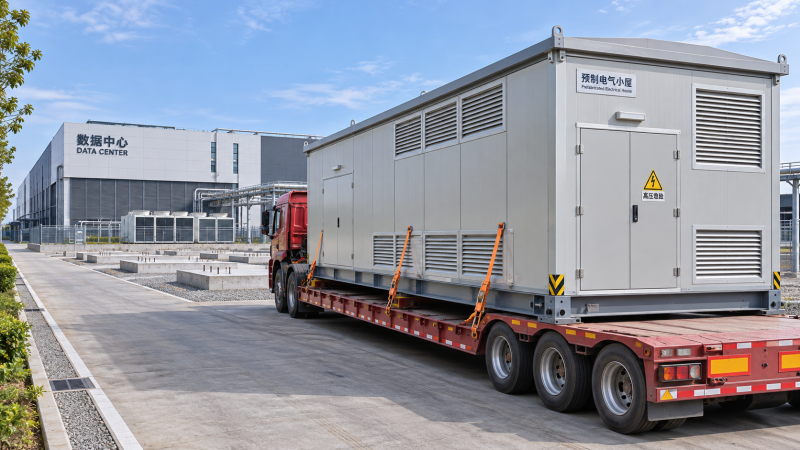
 Electrical House Substations: Budgeting for Transport and InstallationElectrical House Substations: Discover how to budget for transport, installation and commissioning, compare bids and avoid costly project surprises.Nov 04, 2026
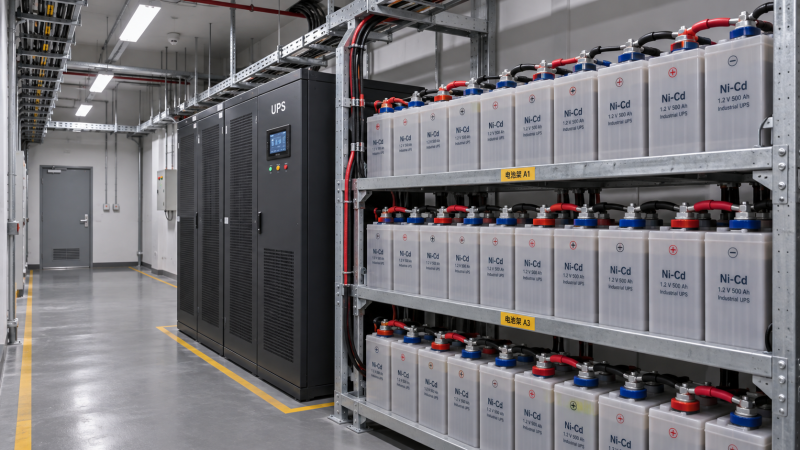
 Nickel-Cadmium UPS Batteries: Maintenance Costs and Service LifeExplore Nickel-Cadmium UPS Batteries, from maintenance costs and service life to disposal requirements, and find out if they’re worth the investment.Nov 04, 2026
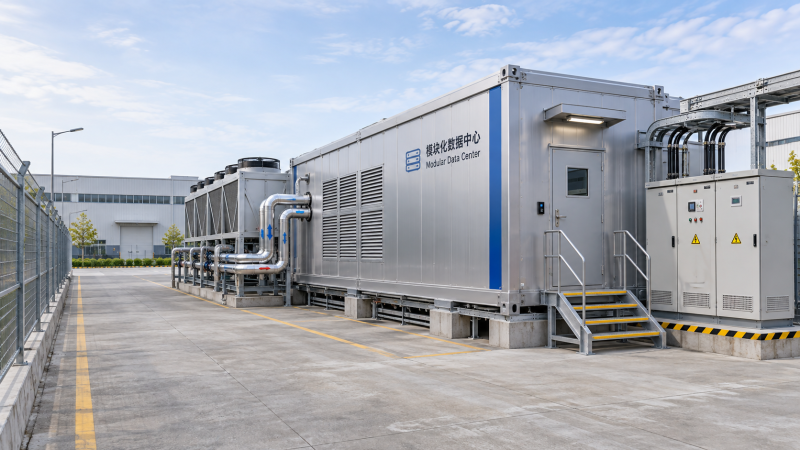
 How energy use affects prefabricated data center lifecycle costPrefabricated data center lifecycle cost depends on energy use, tariffs and workload. Learn how to compare options and make a stronger investment decision.Nov 04, 2026
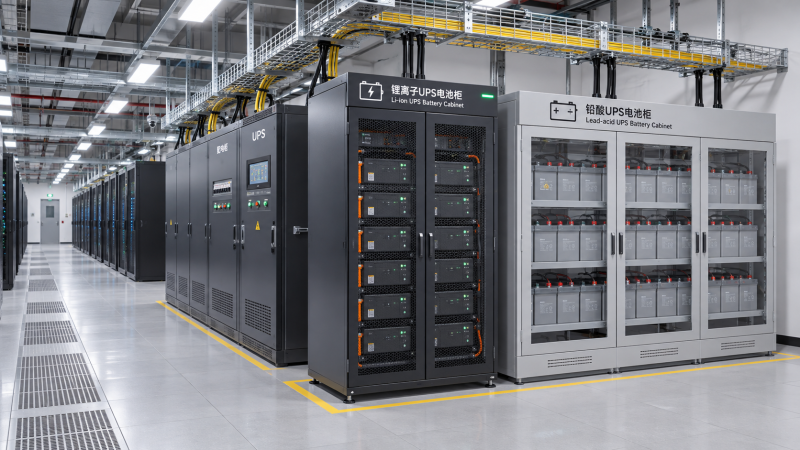
 Lithium-Ion UPS Batteries: Lifetime Cost Compared With Lead-AcidLithium-Ion UPS Batteries vs. lead-acid: compare lifetime costs, replacement needs, maintenance, and retrofit risks to make a smarter investment.Nov 04, 2026