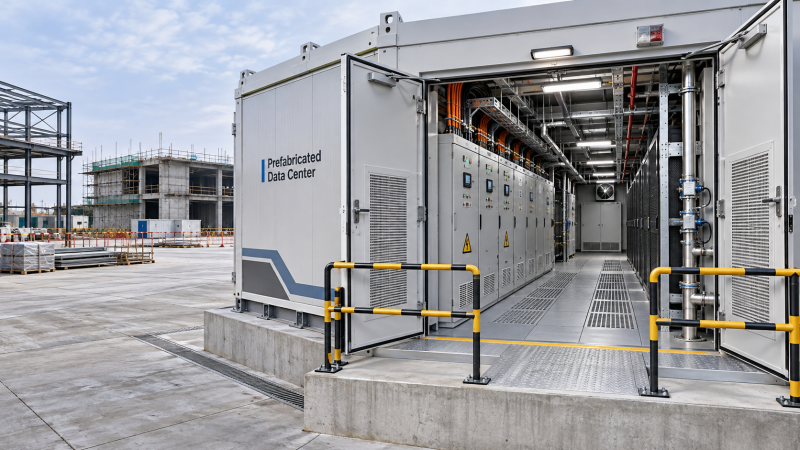
Related Industries
Curation by industry experts
Hot Articles
Popular Tags
When can prefabricated data center commissioning begin on site?
Prefabricated data center commissioning can begin on site once the relevant modules are installed and the conditions for a particular test are safely in place. That does not mean the entire facility must be complete. A team may start with receiving inspections and mechanical checks while utility work continues, provided those activities are separated from unfinished construction and governed by approved procedures.
The more consequential question is when commissioning can progress: from individual component checks to energized equipment, integrated systems testing and operational acceptance. Each stage depends on different resources, interfaces and decisions. For project managers, treating commissioning as a sequence of readiness gates—not a single date after module delivery—makes the schedule easier to defend and delays easier to diagnose.
What can start as soon as modules arrive?
On-site commissioning begins with verification rather than power-up. Once a module is safely positioned and accessible, the commissioning team can inspect its condition against shipping records, approved drawings and factory test documentation. Transport can disturb connections or damage components, so a successful factory acceptance test is not a substitute for checking the equipment after delivery.
Depending on the installation and the approved plan, early work may include:
- Checking for visible damage, missing items and changes made during shipment.
- Confirming module identification, orientation, access clearances and installation against the approved design.
- Reviewing factory test results, outstanding punch-list items and preservation requirements.
- Inspecting accessible mechanical connections, supports, cable routes and equipment labels.
- Verifying that instruments and protective devices are installed and documented before later testing.
Some checks can happen before permanent utility power or cooling water is available. Others require completed foundations, secured modules, finished connections or controlled environmental conditions. The commissioning authority and responsible contractors should define those boundaries in advance; “module delivered” is a logistics milestone, not blanket permission to test.
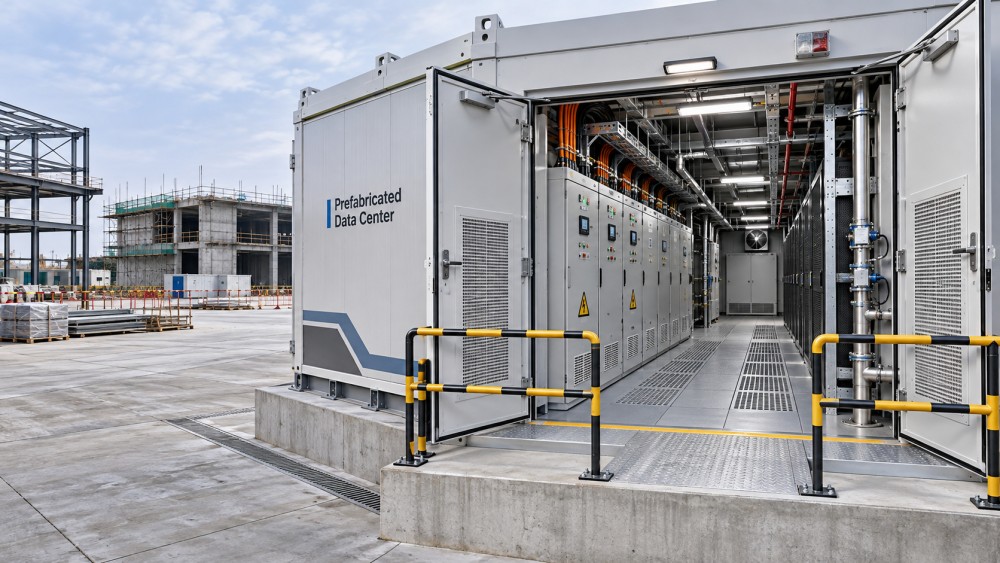
Readiness gates for each commissioning stage
A practical commissioning plan identifies the system under test, its prerequisites and the evidence required to move forward. The gates below are a planning framework rather than a universal test sequence: contract terms, equipment design, local requirements and site safety procedures may change the order.
The distinction matters when a dashboard shows a project as “commissioning started.” That statement may describe visual inspections, not a live demonstration of backup power or cooling resilience. A more useful report identifies the system, stage, date, evidence and unresolved constraints.
Which site conditions determine the start date?
Safe access and construction separation
Commissioning personnel need a controlled work area, safe access and an agreed permit process. Adjacent construction does not necessarily prevent testing, but it can introduce dust, vibration, temporary obstructions or competing work. A team planning to energize a module should know who controls the area, which circuits are isolated and how other trades will be notified.
Set boundaries around the specific system rather than waiting for every part of the site to be finished. At the same time, do not allow schedule pressure to override lockout, grounding, inspection or authorization requirements.
Power availability and authorization
Electrical checks may begin before permanent service is connected, but energized tests require an appropriate source, completed connections, protective measures and authorization from the responsible parties. Temporary power can support selected start-up activities if the equipment supplier and site team approve its capacity, power quality, protection and intended use.
It should not automatically be treated as a substitute for utility-backed testing. A temporary source may be unable to reproduce the operating conditions or failure scenarios needed to demonstrate the final design. Equally, an announced utility allocation is not the same as a connected, energized and commissioned supply. The schedule should show these as separate milestones.
Cooling and heat rejection
A prefabricated cooling module may arrive largely assembled, yet its performance still depends on site interfaces. Pipework, valves, water treatment, heat rejection equipment, pumps, controls and instrumentation may all be needed before meaningful functional tests can proceed.
For liquid-cooled AI infrastructure, check the defined boundary between facility water and the technology cooling system. Coolant compatibility, cleanliness, leak management, flow and temperature limits must match the approved design and supplier instructions. A test performed with temporary cooling or a simulated load can be useful, but its results should be recorded within those conditions rather than presented as proof of full operational performance.
Controls, monitoring and communications
Equipment can start locally while its connection to the building management or electrical power monitoring system remains incomplete. That may be acceptable for a limited start-up, but it leaves a gap in evidence for alarms, remote commands, sequencing and operator visibility.
Before integrated testing, confirm network availability, point mapping, time synchronization where required, access permissions and responsibility for each interface. An interface register that names both sides of every connection is often more useful than a general statement that controls are “nearly complete.”
Factory testing helps—but does not close the site acceptance gap
Factory acceptance testing can establish that a module or assembly operated under a defined set of factory conditions. It gives the site team valuable baseline data and can expose defects before shipment. Its value depends on the documented test scope: whether the actual controls, switchgear, cooling components and loads were present, simulated or excluded.
Site testing addresses a different set of questions. Were connections preserved through transport? Do modules communicate with one another? Does the equipment respond correctly to the actual site distribution system? Can operators see alarms and carry out the intended procedures? Those answers require evidence at the installed boundary.
Project managers should reconcile the factory and site test plans early. Repeating every factory test on site may be unnecessary, while assuming factory results cover field interfaces creates an avoidable blind spot. Record any test exclusions, outstanding defects and changes made between factory release and site start-up.
Build the schedule around dependencies, not delivery dates
Consider a project where the electrical modules arrive on time but permanent utility service is delayed. The team may still complete receiving inspections, verify installation and close documentation gaps. With an approved temporary supply, it might also conduct selected equipment tests. However, the project should not claim that the permanent power path or full transfer sequence has been accepted until the required site configuration and test conditions are available.
That distinction changes how the schedule is managed. Instead of moving the entire commissioning bar, separate activities by system and prerequisite:
- Define the test boundary. Identify the module, connected equipment and interfaces included in each procedure.
- Assign an owner to every prerequisite. Utility connection, pipe flushing, controls points, vendor attendance and test-load provision may sit with different organizations.
- Set a readiness review before mobilization. Check approved procedures, permits, drawings, equipment status, personnel and safety controls against the planned test.
- Protect time for correction and retesting. A completed test is not necessarily a passed test; failed results need an owner, remedy and repeat-test plan.
- Track evidence and acceptance separately. Test sheets, trend data, exceptions and sign-offs should be available to the parties who must accept the result.
Where phases overlap, maintain a live matrix showing which systems are under construction, isolated, energized, under test or accepted. This gives the project team a common picture and reduces the chance that one contractor changes a configuration another team is relying on.
When is integrated systems testing possible?
Integrated systems testing can begin when the participating systems have completed the required preceding checks, their interfaces are functional and the planned scenarios can be performed safely. Depending on the facility, those scenarios may involve utility loss, generator start, transfer between sources, UPS operation, cooling response, alarms or recovery to normal operation.
The exact sequence and acceptance criteria should be agreed before testing begins. It is also important to establish who can stop a test, how the site will be restored after an interruption and what operational risks remain. Simulated signals and temporary arrangements should be identified in the records, because they may limit what a successful result demonstrates.
Test loads deserve particular attention. They should be suitable for the agreed electrical and thermal scenarios, but a load bank does not necessarily reproduce the behavior of an AI workload, including rapid changes in demand or the cooling characteristics of a particular rack configuration. If those behaviors matter to acceptance, the team needs an appropriate test method or a documented plan to verify them later.
What should be resolved before handover?
Operational acceptance is more than the last successful test. The owner and operator need to understand the installed configuration, remaining defects and conditions attached to acceptance. Handover packages commonly include approved test results, as-built information, equipment manuals, settings, warranties, maintenance requirements and relevant training records.
Not every minor issue must prevent handover, but unresolved items should be assessed against the contract and operational risk. Assign responsibility and a due date, document any temporary workaround and agree whether retesting is required. Critical safety, protection or redundancy issues should not be obscured by a generic “punch list open” status.
For a project manager, the most useful answer to “when can commissioning begin?” is therefore a qualified one: start each safe, approved activity as soon as its own prerequisites are met, then make the evidence visible. That approach captures the scheduling benefit of prefabrication without confusing early site checks with a facility ready to support production IT loads.
Questions about data center smoke detection standards? Contact RackLedger for further insights.
We respect your privacy. Your information is strictly confidential.
Recommended News