Related Industries
Curation by industry experts
Hot Articles
Popular Tags
Why Evaporative Coolers Lose Efficiency: Scale, Airflow and Water Quality
When Evaporative Coolers lose efficiency, maintenance teams need to look beyond the symptoms. Mineral scale can restrict heat transfer, while fouled pads and fans reduce airflow.
Poor water quality can accelerate deposits and equipment wear. For data center and facility service personnel, identifying these problems early helps protect cooling performance and avoid unnecessary downtime.
Start by comparing current performance with a reliable baseline under similar weather and load conditions. Then investigate water distribution, airflow, and water chemistry together before replacing components.
What Should Maintenance Teams Check First?
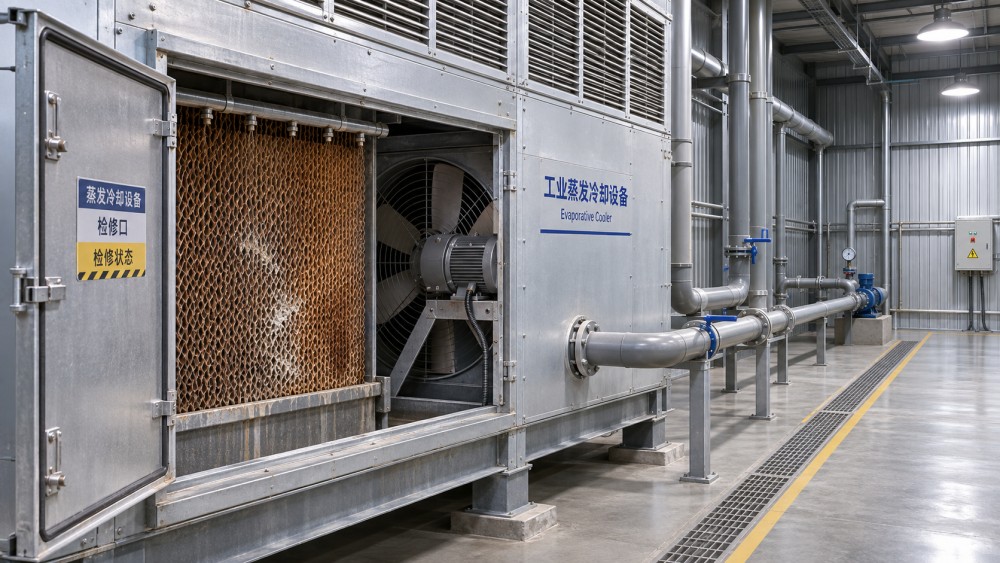
A warmer supply temperature does not automatically mean the cooler has failed. Outdoor humidity, heat load, control settings, and water delivery can all change the result.
Begin with the operating trend: when performance declined, whether the change was gradual or sudden, and whether it affects one unit or several connected units.
Record outdoor dry-bulb and wet-bulb temperatures, relevant entering and leaving air temperatures, equipment load, fan status, and water system alarms at approximately the same time.
Compare those readings with commissioning records or previous observations taken under similar conditions. A comparison across different weather or load conditions can point technicians toward the wrong cause.
For critical facilities, confirm available cooling capacity and redundancy before taking equipment offline. Coordinate isolation and testing with the operations team and follow the site change process.
If temperatures approach operating limits, water leaks threaten electrical equipment, or a critical alarm persists, escalate immediately under the facility response plan rather than continuing routine troubleshooting.
Is the Cooler Actually Underperforming?
Evaporative cooling depends on outdoor wet-bulb temperature, not dry-bulb temperature alone. As humidity rises, the theoretical cooling opportunity generally decreases, even when equipment remains clean.
For a direct evaporative cooler, compare the leaving air temperature with the entering air wet-bulb temperature and the manufacturer’s expected performance at the measured airflow and water conditions.
A common direct-cooling effectiveness calculation divides the entering-to-leaving dry-bulb temperature drop by the difference between entering dry-bulb and entering wet-bulb temperatures, using consistent units.
For example, entering air at 35°C dry bulb and 20°C wet bulb that leaves at 23°C gives 80% effectiveness: 12°C divided by 15°C.
This calculation applies to direct evaporative cooling and assumes representative, simultaneous measurements. It should not be applied unchanged to indirect systems, cooling towers, or hybrid equipment.
Indirect evaporative systems keep the supply and working airstreams separate. Assess their performance using the manufacturer’s specified temperatures, airflow rates, water conditions, and calculation method.
For towers or fluid coolers, assess leaving water temperature against entering air wet-bulb temperature, flow, and heat load. Compare the result with the equipment’s documented design conditions.
Check sensor calibration and placement before drawing conclusions. A probe near a wet surface, recirculated exhaust, or an air leak may not represent the actual airstream.
How Does Scale Reduce Cooling Performance?
As water evaporates, dissolved minerals remain in the circulating water. Without effective water management, deposits can form on wetted media, nozzles, distribution piping, and heat transfer surfaces.
In direct evaporative coolers, scale can block pad passages and prevent even wetting. In equipment with heat exchange surfaces, deposits can also add resistance to heat transfer.
Look for hard white or tan deposits, uneven pad color, dry streaks, restricted spray patterns, and rising pressure loss across the media at comparable operating conditions.
A crust on an accessible surface is a warning, not proof that every internal surface is scaled. Inspect representative locations and document findings before selecting a treatment.
Check strainers, spray headers, distribution holes, pump operation, and basin water level. A dry pad section may result from a blocked distributor rather than mineral buildup on the pad itself.
Use the equipment manufacturer’s approved cleaning method. Aggressive acids, pressure washing, or incompatible brushes can damage media, coatings, seals, and adjacent components.
Replace media when deposits cannot be removed safely or when the material is deteriorated. Record the replacement date and investigate the water conditions that caused premature fouling.
Could Restricted Airflow Be the Main Problem?
Insufficient airflow can reduce cooling delivery even when water is available and pads appear wet. Common causes include dirty filters, blocked inlets, damaged media, and fan problems.
Start with a visual inspection of intake screens, filters, pads, discharge paths, and dampers. Check for debris, collapsed media, unintended obstructions, and dampers that fail to reach position.
Inspect fans and drives according to site safety procedures. Look for damaged blades, loose belts where fitted, unusual vibration, bearing noise, and motor or drive alarms.
Compare fan speed, motor current, and static pressure with documented normal values. Interpret them together: a single electrical reading does not establish the actual airflow rate.
Measure pressure drop across filters or media at a comparable fan operating point. Rising pressure can indicate blockage, but changing fan speed or damper position complicates comparisons.
Where reliable airflow measurement is available, compare it with the design range and manufacturer’s test method. Confirm instruments are suitable for the duct or plenum configuration.
Also check for bypass air around improperly seated pads or open access panels. Air that avoids wetted media can raise supply temperature without an obvious fan fault.
Do not increase fan speed blindly to overcome blockage. Higher speed may raise energy use, noise, and mechanical stress while leaving the underlying restriction unresolved.
Which Water Quality Checks Matter Most?
Water quality affects scaling, corrosion, biological growth, and component life. The right control limits depend on the source water, equipment materials, treatment program, and manufacturer’s requirements.
Review makeup water and circulating water records for conductivity, pH, hardness, alkalinity, and other parameters specified by the water treatment provider or equipment manufacturer.
Conductivity is useful for tracking dissolved ions and blowdown control, but it does not identify individual minerals or prove that water is free of scaling risk.
Cycles of concentration are often estimated by comparing an appropriate dissolved constituent in circulating water with the same constituent in makeup water, subject to treatment program assumptions.
Higher cycles can reduce makeup water demand, but they also concentrate minerals and may increase scaling or corrosion risk. The acceptable range is site-specific, not universal.
Verify that conductivity probes are calibrated, sample points are representative, and the controller actually opens the blowdown valve when required. Check for stuck valves and blocked drain lines.
Excessive blowdown can waste water and treatment chemicals. Inadequate blowdown can concentrate dissolved solids, so investigate both the measurement and the valve before changing setpoints.
Sudden changes in municipal supply, reclaimed water quality, or seasonal source conditions can disrupt an established treatment program. Recheck the water analysis when unexplained deposits appear.
Coordinate chemical selection and dosing with the qualified water treatment provider. Confirm compatibility with media, metals, coatings, seals, discharge requirements, and the facility’s operating procedures.
How Should Technicians Investigate Biological Fouling?
Slimy deposits, odors, discoloration, and recurring blockage can indicate biological fouling. These signs warrant investigation, but appearance alone cannot identify an organism or establish health risk.
Inspect basins, drift eliminators where installed, distribution components, and accessible surfaces under the site’s water management plan. Use required protective equipment and avoid unnecessary aerosol generation.
Cooling towers and some other water systems can present Legionella risks. Follow applicable regulations and the facility’s documented water management program, including required monitoring and response procedures.
If the program identifies an action threshold or suspected exposure, notify the designated responsible personnel immediately. Do not improvise disinfection or restart an affected system without authorization.
Keep chemical handling, sampling, cleaning, and waste disposal within approved procedures. Confirm that treatment controls biofilm without damaging equipment or conflicting with other water chemistry requirements.
A Practical Troubleshooting Sequence for Service Calls
1. Establish the symptom. Confirm whether the complaint is high supply air temperature, high leaving water temperature, reduced airflow, frequent alarms, or excessive water use.
2. Check operating context. Record outdoor conditions, facility load, active cooling units, control mode, and any recent maintenance or configuration changes before altering settings.
3. Verify indications. Compare critical sensors with suitable calibrated instruments and check trend timestamps. Confirm that displayed values correspond to the correct equipment and locations.
4. Inspect water delivery. Check basin level, pump operation, strainers, distribution uniformity, and visible leaks. Investigate dry areas and weak spray patterns before assuming media failure.
5. Inspect the air path. Check filters, media, dampers, fans, and bypass gaps. Measure pressure or airflow where practical and compare with an appropriate baseline.
6. Review water treatment. Examine test results, blowdown operation, recent chemical changes, and makeup water quality. Request specialist analysis when the cause remains uncertain.
7. Correct and verify. Apply approved repairs, return controls to their intended configuration, and repeat measurements. Document the result alongside weather, load, and remaining concerns.
If several faults are present, address the condition posing the greatest immediate operational or safety risk first. Schedule noncritical cleaning around redundancy and workload requirements.
When Is Cleaning Enough, and When Should Parts Be Replaced?
Cleaning is generally worth considering when deposits are accessible, components remain structurally sound, and the manufacturer permits a method suited to the material and contamination.
Replacement may be appropriate when pads are brittle, distorted, heavily blocked, or no longer distribute water evenly after approved cleaning. Inspect seals and frames at the same time.
For fans, pumps, valves, and sensors, base replacement decisions on condition, test results, availability of approved parts, and the consequences of another failure.
Before ordering, confirm model, dimensions, material compatibility, operating specifications, lead time, and commissioning requirements. A substitute part that fits physically may still change performance or reliability.
Where deposits return quickly after cleaning, replacing media alone is unlikely to solve the problem. Reassess water chemistry, blowdown, distribution, and operating schedules with the relevant specialists.
What Should a Preventive Maintenance Record Include?
Keep a consistent record of inspection dates, operating hours, ambient conditions, load, temperatures, pressure readings, water tests, alarms, cleaning, and component replacements.
Photographs of the same pad sections, distribution points, and basin areas can make gradual deterioration easier to recognize. Note the location and date of each image.
Track recurring symptoms against weather and workload. A unit that struggles only during humid periods may need a different response from one that deteriorates steadily across seasons.
Set inspection and cleaning intervals using manufacturer guidance, water management requirements, operating experience, and local conditions. Increase checks when source water or operating patterns change.
After major service, verify alarm reporting, control sequences, valve positions, and return to normal operation. Inform the operations team of unresolved defects and any temporary capacity limits.
Conclusion
Evaporative cooler efficiency depends on more than clean pads. Reliable diagnosis connects weather and load with water distribution, airflow, surface condition, controls, and treatment performance.
For maintenance teams, the best next action is a measured comparison against a relevant baseline, followed by targeted inspection and verification. Escalate safety and capacity risks promptly.
Questions about data center smoke detection standards? Contact RackLedger for further insights.
We respect your privacy. Your information is strictly confidential.
Recommended News
 Server Solid-State Drives: What Do Endurance Ratings Mean for Buyers?Server Solid-State Drives: Understand DWPD and TBW, estimate workload endurance, and compare warranties and costs to choose the right SSD for your servers.Nov 04, 2026
 What Are Network Switches? A Guide to Ports, Speed and Data Center RolesNetwork Switches explained: discover how ports, speeds, uplinks and data center roles affect performance—and learn what to look for when choosing a switch.Nov 04, 2026
 Why Evaporative Coolers Lose Efficiency: Scale, Airflow and Water QualityWhy do Evaporative Coolers lose efficiency? Discover how scale, restricted airflow and water quality affect performance—and what maintenance teams can do.Nov 04, 2026
 Fiber Optic Cables: Single-Mode vs. Multimode for Data Center LinksFiber Optic Cables for data centers: compare single-mode and multimode options, link costs, reach, and compatibility to make a confident choice.Nov 04, 2026